When is “too late” really too late in litigation? The Supreme Court just drew the line in bold.
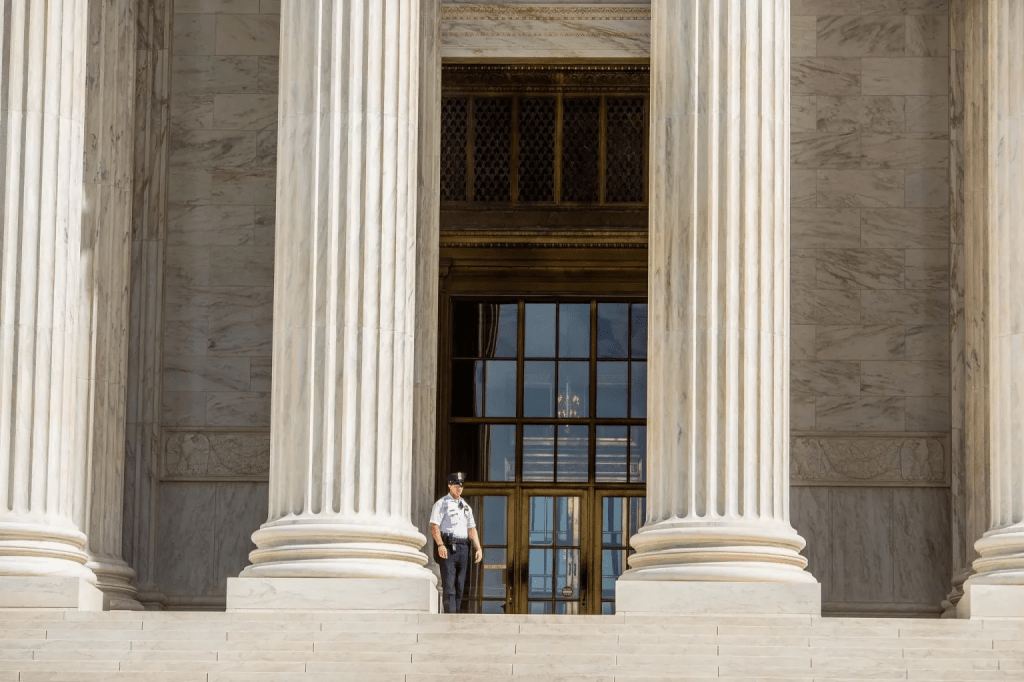
In a crisp, unanimous decision authored by Justice Clarence Thomas, the U.S. Supreme Court reaffirmed that Rule 60(b)(6) of the Federal Rules of Civil Procedure—often seen as the “last chance” catchall for relief from final judgments—remains a narrow and exceptional escape hatch. The ruling in BLOM Bank SAL v. Honickman holds that finality matters, and parties cannot bypass it merely by requesting to amend their complaint after the fact.
📌 The Case: Terrorism Claims, Dismissed Twice
At the heart of the dispute were victims and families of victims of Hamas terrorist attacks, dating back more than two decades. They brought suit under the Anti-Terrorism Act against BLOM Bank SAL, a large Lebanese financial institution. The claim? That the bank had aided and abetted terrorism by allegedly allowing Hamas-linked accounts to operate under its purview.
However, both the Southern District of New York and the Second Circuit Court of Appeals dismissed the complaint—twice—on the grounds that plaintiffs had not adequately alleged that the bank was aware of the likelihood that its services would contribute to terrorist activities.
Plaintiffs attempted to reopen the case under Rule 60(b)(6) so they could file an amended complaint consistent with the appellate court’s ruling. While the district court denied the motion for failing to meet the “extraordinary circumstances” threshold, the Second Circuit reversed, suggesting that the liberal amendment policy in Rule 15 should be considered alongside the high bar of Rule 60(b)(6).
Enter the Supreme Court—who swiftly and unanimously shut that door.
⚖️ What Is Rule 60(b), and Why Does It Matter?
Federal Rule of Civil Procedure 60(b) is a mechanism allowing litigants to request a court to reopen a final judgment, but only under specific and well-defined circumstances. Subsections (1) through (5) enumerate reasons such as:
- Mistake or excusable neglect
- Newly discovered evidence
- Fraud
- Void judgments
- Judgments no longer equitable
Rule 60(b)(6) is the catchall provision, allowing reopening for “any other reason that justifies relief.” Historically, the Court has emphasized that this provision is not a safety net for every misstep, but rather, a tool for rare and exceptional situations.
📚 Thomas’ Textualist Take: Finality Is Foundational
Justice Thomas, writing for the majority (with Justice Jackson concurring in judgment but not the reasoning), returned to foundational precedent to emphasize a high threshold for Rule 60(b)(6) relief. Specifically, the Court re-invoked two contrasting cases:
- Klapprott v. United States (1949): A judgment was set aside where the petitioner had been incarcerated, ill, and without counsel during denaturalization proceedings—effectively denied any meaningful opportunity to defend himself.
- Ackermann v. United States (1950): A petitioner who simply chose not to appeal, despite having legal representation and full awareness of his options, was not entitled to relief.
The contrast established a legal principle: “There must be an end to litigation someday.” As Thomas wrote:
“Free, calculated, deliberate choices are not to be relieved from.”
This principle guided the Court’s view that the plaintiffs in Honickman made a strategic litigation choice—and such choices, even if they later prove ineffective, do not justify reopening a case under Rule 60(b)(6).
🔍 Rule 15 vs. Rule 60(b): Apples and Oranges
One of the Second Circuit’s key missteps was its attempt to blend Rule 15(a)’s liberal policy of amendment with Rule 60(b)’s rigorous post-judgment standard. Justice Thomas firmly rejected this:
“The standard [under Rule 60(b)(6)] does not change when a party seeks to reopen his case to amend his complaint.”
The Court clarified that Rule 15 governs amendment during active litigation, but Rule 60(b) governs reopening litigation that has already concluded. Once a final judgment is entered, litigants must overcome the heavy burden of “extraordinary circumstances”, regardless of the purpose of reopening.
📉 No Broader Disruption—But a Strong Signal to Trial Courts
While the Honickman ruling isn’t groundbreaking in doctrinal terms, it does provide a firm and recent reaffirmation of how Rule 60(b)(6) should be interpreted—strictly, narrowly, and consistently. This decision may not reshape the legal landscape, but it will likely appear frequently in lower court rulings as a definitive citation against post-judgment do-overs based on strategic regrets or hindsight corrections.
For trial courts, this is a green light to maintain rigid standards of finality, preventing Rule 60(b)(6) from becoming a catchall for litigants looking to rewrite history.
🎓 What Law Students & Practitioners Should Take Away
For law students, the ruling is a casebook example of statutory interpretation, procedural finality, and litigation strategy consequences. For practitioners, it’s a warning shot: if your case is dismissed, don’t expect a second bite at the apple unless something truly extraordinary has occurred.
This is a reminder that:
- Rule 60(b)(6) is not a vehicle for strategic reassessment
- Courts won’t bend rules just because a plaintiff wants to amend
- Finality matters, especially in high-stakes, politically sensitive litigation like terrorism claims
#SCOTUS #Rule60b #CivilProcedure #FederalCourts #LegalFinality #BLOMBankCase #HonickmanRuling #LawUpdate #AmendComplaint #LitigationStrategy #LegalWriting


Leave a comment