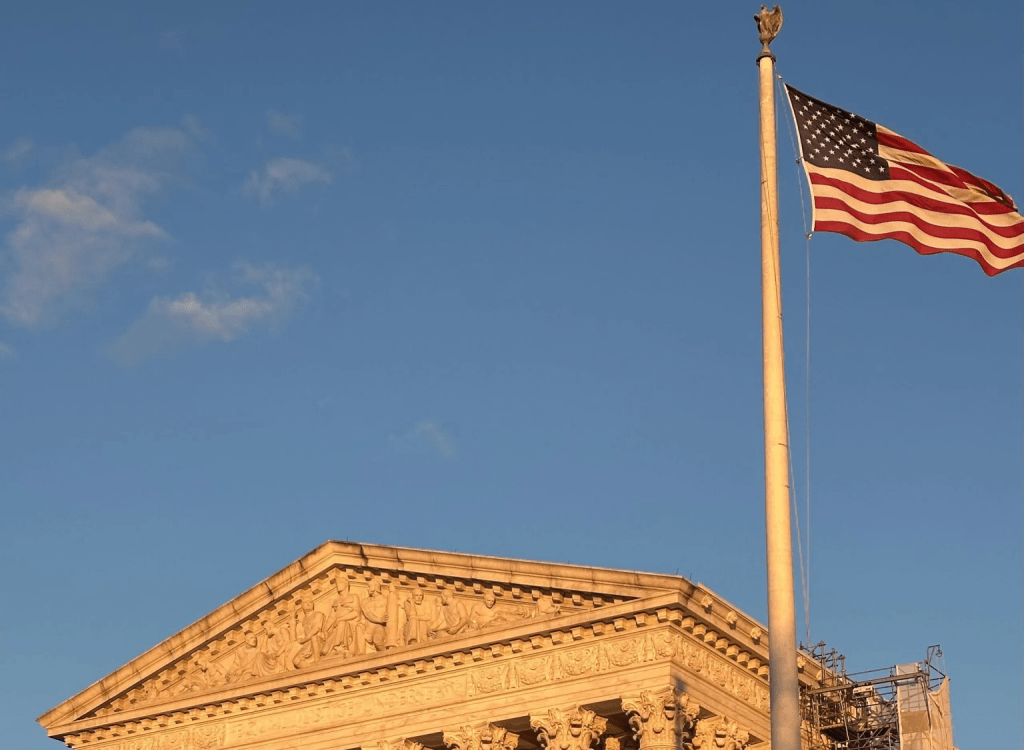
The U.S. Supreme Court is once again being asked to settle a high-stakes constitutional debate—this time over who has the authority to appoint members of a federal health panel that determines what services your insurance must cover for free.
In Kennedy v. Braidwood Management, the issue at hand isn’t just about public health—it’s about constitutional power, agency structure, and the boundaries of executive authority. The outcome could redefine how the federal government appoints experts who shape healthcare mandates nationwide.
⚖️ The Legal Fight: Who Appoints the U.S. Preventive Services Task Force?
Under the Affordable Care Act (ACA), private health insurance plans must cover certain preventive services—like screenings, vaccines, and medications—at no cost to the patient, as recommended by an entity called the U.S. Preventive Services Task Force (USPSTF). This panel of health experts has made wide-ranging decisions with direct, nationwide implications.
One such recommendation came in 2019, when the USPSTF endorsed PrEP (Pre-Exposure Prophylaxis) for HIV prevention, triggering mandatory coverage by insurers.
That recommendation sparked a constitutional and ideological backlash.
A group of individuals and small business owners challenged the mandate in federal court, claiming that being required to cover PrEP violates their religious beliefs. But their challenge didn’t stop there—they also targeted the constitutional foundation of the task force itself, arguing that its structure violates the Appointments Clause of the U.S. Constitution.
📜 What the Appointments Clause Says (and Why It Matters)
The Appointments Clause requires that “principal officers” of the United States be nominated by the President and confirmed by the Senate. If the members of the USPSTF are principal officers—and are not appointed in this constitutionally prescribed way—then their legal authority, and by extension their recommendations, may be invalid.
The lower courts sided with the challengers, prompting the Biden administration to seek a reversal from the Supreme Court.
🧠 Oral Arguments & SCOTUS Intervention
On April 21, 2025, the justices heard arguments in this complex case. Some seemed skeptical of the challengers’ claims, while others raised questions about whether the Secretary of Health and Human Services (HHS) really has the power to appoint—or remove—task force members.
The justices then issued a rare post-argument order on April 26, asking both parties to submit supplemental briefs on one specific question: Does the Secretary of HHS actually have appointment power over the USPSTF?
🧾 The Government’s Argument: Yes, the Power Exists
In a supplemental brief filed May 1, U.S. Solicitor General D. John Sauer made a case for interpreting existing law in a way that saves the task force’s legitimacy.
Sauer argued that:
- The Director of the Agency for Healthcare Research and Quality (AHRQ) is tasked by statute with “convening” the task force.
- While the statute doesn’t explicitly mention appointment, the power to convene, he said, logically includes the power to appoint.
- Moreover, subsequent statutes transferred that appointment authority from the AHRQ director to the Secretary of HHS.
- Relying on precedent from United States v. Hartwell, Sauer said a department head having final say over appointments is constitutionally valid, even if the process is informal or delegated.
- He warned that interpreting the laws narrowly could force the court to invalidate the entire task force, undermining public health policy.
🆚 The Challengers’ Argument: Congress Didn’t Do Its Job
Representing the challengers, Jonathan Mitchell pushed back hard, saying:
- The law only says the AHRQ director should “convene” the task force—it says nothing about appointments.
- The word “convene” can’t be stretched to mean “appoint and control.”
- Congress deliberately left the task force’s composition vague, which doesn’t justify inferred or assumed powers.
- If task force members are considered “principal officers,” then only the President—with Senate confirmation—can legally appoint them.
- Even if they’re “inferior officers,” Mitchell argued, the statutes don’t clearly vest appointment authority in the HHS Secretary as required.
🏛️ Why This Case Matters
This isn’t just a case about health insurance or religion—it’s about executive authority, constitutional structure, and the separation of powers. Key implications include:
- If the Court agrees with the challengers, the ruling could invalidate years of USPSTF recommendations, causing regulatory chaos and raising insurance costs.
- A ruling against the government could redefine how advisory boards and health agencies are staffed—forcing Congress to reauthorize or restructure many health-related functions.
- It may also open new religious liberty challenges to federal health mandates.
🔍 The Bigger Picture for Lawyers and Law Students
The case offers rich insight into:
- Constitutional interpretation of vague statutory language.
- Appointments Clause doctrine—especially around “principal” vs. “inferior” officers.
- The balance between judicial restraint and administrative pragmatism.
- How statutory silence is handled when fundamental constitutional structures are at stake.
#AppointmentsClause #SCOTUS2025 #USPSTF #AffordableCareAct #HealthLaw #ReligiousLiberty #AdministrativeLaw #PrEPMandate #HHSAuthority #LegalNews #LawStudentReads #ConLaw
Source: https://www.scotusblog.com/2025/05/additional-briefing-filed-in-hhs-task-force-case/


Leave a comment