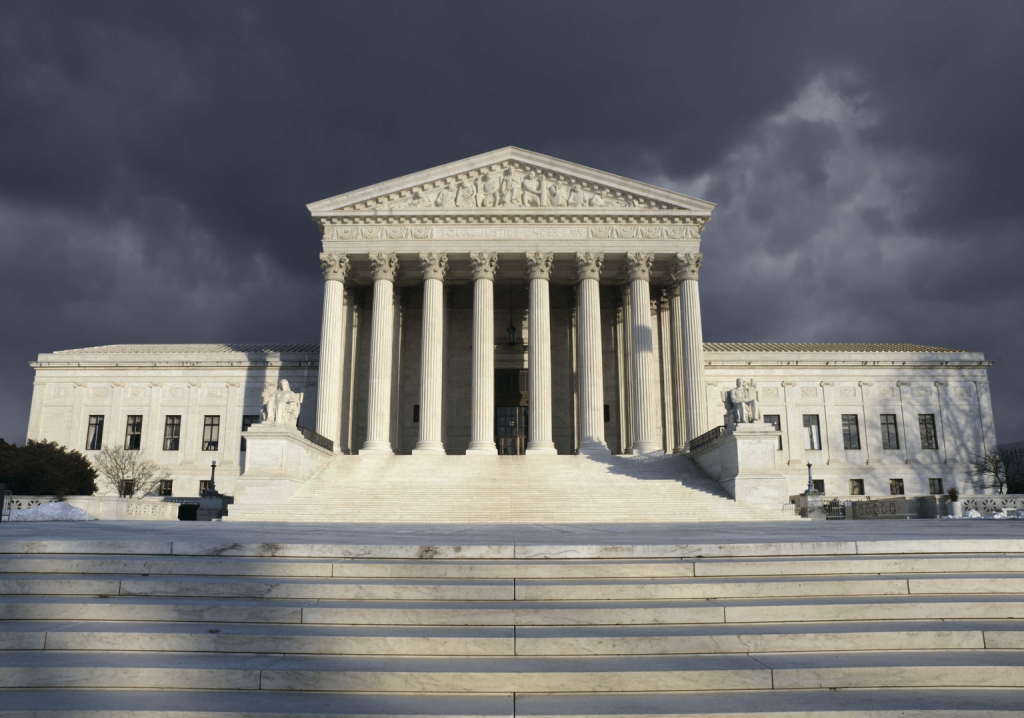
In a pair of significant rulings delivered on the same day, the United States Supreme Court has drawn sharper lines around a key procedural issue: where legal challenges to Environmental Protection Agency (EPA) decisions under the Clean Air Act must be filed. These decisions, EPA v. Calumet and Oklahoma v. EPA, bring clarity to a long-contested venue provision that distinguishes between “nationally applicable” actions and “locally or regionally applicable” actions.
These rulings carry substantial implications not just for environmental regulation, but for the strategic litigation decisions made by states, energy companies, environmental advocates, and the federal government.
⚖️ Case 1: EPA v. Calumet (2024)
The Dispute:
A coalition of small oil refineries in Louisiana challenged the EPA’s denial of their requests for exemptions from the Clean Air Act’s Renewable Fuel Standard (RFS) program, which mandates blending renewable fuels into the nation’s fuel supply. The EPA denied those exemptions based on its broader policy interpretation, asserting the denials were based on a nationwide framework. The refineries, however, filed their challenges in the Fifth Circuit Court of Appeals.
The Legal Question:
Did these challenges belong in a regional circuit court (5th Circuit), or did they qualify as “nationally applicable” and therefore require filing in the D.C. Circuit Court of Appeals?
Supreme Court Ruling (7–2):
Justice Clarence Thomas, writing for the majority, reversed the Fifth Circuit’s ruling. While the exemption petitions were individually submitted, Thomas emphasized that the EPA’s rejections were not narrowly localized. Instead, they were guided by a uniform national interpretation that applied across all refineries. This triggered the Clean Air Act’s exception: even if actions are local in appearance, they must be filed in the D.C. Circuit if they are based on determinations of nationwide scope or effect.
Key Takeaway:
Even “localized” EPA actions must be funneled to the D.C. Circuit if the agency relies on generic, national policy justifications.
Dissent (Gorsuch & Roberts):
Justice Neil Gorsuch argued that the Clean Air Act mandates individualized consideration of refinery hardship exemptions. He warned against allowing EPA’s policy generalizations to override what should be a case-specific adjudicative process, expressing concern that venue determinations would become overly politicized or manipulated by broad EPA reasoning.
⚖️ Case 2: Oklahoma v. EPA (2024)
The Dispute:
In this case, Oklahoma and Utah—joined by companies within their energy industries—challenged the EPA’s rejection of their state-submitted emissions control plans under the Clean Air Act’s “Good Neighbor” provision, designed to curb interstate air pollution. Initially, the Tenth Circuit transferred the challenge to the D.C. Circuit, ruling the EPA’s rule applied uniformly to 21 states, making it nationally applicable.
Supreme Court Ruling (6–3):
The high court reversed the Tenth Circuit. Again led by Thomas, the majority ruled that the EPA’s disapproval of Oklahoma’s and Utah’s state plans was not based on a blanket national policy, but on state-specific factual evaluations. Since no “nationwide factor” governed the EPA’s action, the challenge should have remained in the Tenth Circuit.
Key Takeaway:
EPA actions that are based on fact-specific, state-level determinations must be challenged in the appropriate regional circuit, not the D.C. Circuit.
Concurrence (Gorsuch & Roberts):
While agreeing with the result, Gorsuch and Roberts expressed caution about over-interpreting “nationwide effect” and seemed to prefer a narrower view of the EPA’s role in defining where it can be sued.
🏛️ Legal Significance: Why These Rulings Matter
- Venue Dictates Strategy:
For litigants, knowing the correct court can drastically influence procedural outcomes and judicial attitudes. The D.C. Circuit has a reputation for deference to administrative agencies—important context for any lawyer deciding where to sue. - Limits on EPA’s Framing Power:
These decisions prevent the EPA from unilaterally shifting venue by invoking national policies. Courts will now scrutinize how the EPA actually made its decisions, rather than just accepting the agency’s characterization. - Clarifies Administrative Law Boundaries:
These cases reinforce the Supreme Court’s recent trend of reining in federal agency power—putting the brakes on agencies using policy breadth to sidestep local judicial review.
##CleanAirAct #EPALawsuit #SCOTUS2024 #AdministrativeLaw #EnvironmentalLaw #LegalStrategy #VenueMatters #SupremeCourtRulings #RefineryExemptions #StateVsFederal
 lawrota.com
Leave a comment