What Law Students and Legal Minds Need to Know About the Tennessee Transgender Treatment Ban
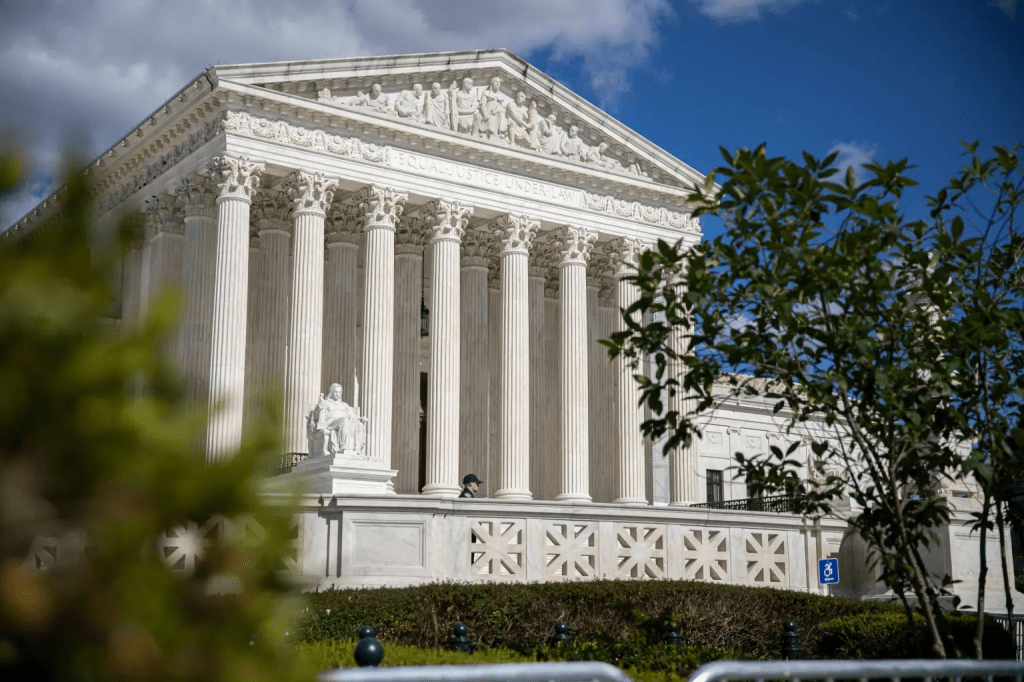
On Wednesday, the U.S. Supreme Court issued a highly consequential ruling in United States v. Tennessee, upholding a controversial Tennessee law (SB1) that bans puberty blockers and hormone therapy for transgender minors. In a 6–3 decision, the Court rejected constitutional challenges brought by three transgender teens, their parents, and a Memphis doctor, sparking vigorous debate across legal, medical, and civil rights communities.
This ruling marks a pivotal legal development in the battle over transgender rights, especially for minors, and reinforces a growing trend among states to impose restrictions on gender-affirming care. At the heart of the legal challenge was whether SB1 violated the Equal Protection Clause of the Fourteenth Amendment.
What SB1 Entails
Passed by the Tennessee legislature in 2023, SB1 prohibits medical providers from administering puberty blockers or hormone therapy to transgender minors. However, it allows these same treatments for non-gender-related purposes, such as early-onset puberty. The law’s language expresses the state’s interest in “encouraging minors to appreciate their sex,” a value-laden phrase that has become central to the legal and philosophical dispute.
The Legal Challenge
Challengers argued that the law discriminates based on sex and transgender status, asserting that it should be subjected to heightened scrutiny. They claimed the ban violates the Equal Protection Clause by denying transgender youth access to medically necessary treatments available to cisgender youth.
A federal district court initially sided with the challengers, pausing enforcement of the law. U.S. District Judge Eli Richardson emphasized that the treatments are widely accepted in pediatric medicine and comparable in risk to other treatments Tennessee permits.
However, the Sixth Circuit reversed that decision, applying a rational basis review—the most lenient level of constitutional scrutiny. It ruled the state has a legitimate interest in regulating controversial medical treatments for minors, thus allowing the law to stand.
Supreme Court’s Majority Opinion
Chief Justice John Roberts authored the majority opinion, joined by Justices Thomas, Alito, Gorsuch, Kavanaugh, and Barrett. The Court agreed that rational basis review was appropriate because SB1 does not explicitly classify individuals based on sex or transgender status. Instead, it targets a medical procedure based on its purpose.
Roberts emphasized that while the policy issues involved are deeply divisive and tied to evolving science, the Court’s only role is to assess the constitutionality of the law—not its wisdom or morality. “We leave questions regarding its policy to the people, their elected representatives, and the democratic process,” he wrote.
Crucially, the Court declined to extend its 2020 decision in Bostock v. Clayton County, which held that federal employment law prohibits discrimination against LGBTQ workers, to the medical context.
Roberts dismissed the challengers’ claim that the law effectively creates sex-based distinctions by allowing hormone treatment for cisgender minors while prohibiting the same for transgender minors. The distinction, he said, is not based on sex but on the underlying medical purpose of the treatment.
Concurring Opinions: Thomas and Barrett Add Layers
Justice Clarence Thomas, in a 23-page concurrence, heavily criticized reliance on what he termed “politicized” medical consensus. He contended that the expertise cited by the challengers was built on “weak evidence” and driven by ideological motives.
Justice Amy Coney Barrett also concurred separately, focusing on the legal classification of transgender people. She argued that transgender individuals do not qualify as a “suspect class” because they do not share immutable traits and are not sufficiently discrete or politically powerless.
Both concurrences highlight a conservative skepticism not only toward the specific legal claims but also toward the broader framework of LGBTQ+ protections and the evolving definitions of identity in constitutional law.
Dissent: A Fierce Rebuke from the Left
Justice Sonia Sotomayor, joined by Justices Ketanji Brown Jackson and Elena Kagan (in part), issued a scathing dissent. Sotomayor criticized the majority for authorizing “untold harm to transgender children” and accused the Court of ignoring the real-world consequences of its decision.
She argued that the law does in fact classify based on sex, because it prohibits medical care precisely when that care enables a child to live in a way that differs from their birth-assigned sex. Thus, intermediate scrutiny—not rational basis—should apply.
Sotomayor further argued that transgender people should be recognized as a suspect class, citing a long history of discrimination, violence, and state-sanctioned harm, including recent federal actions threatening the rights of transgender individuals in schools, healthcare, and the military.
She concluded her dissent with a rare show of raw emotion, reading from the bench and dropping the traditional “I respectfully dissent,” instead offering a solemn: “I dissent.”
#TransRights #SCOTUS #LGBTQLaw #EqualProtection #ConstitutionalLaw #TennesseeLaw #LawStudents #LegalDebate #GenderAffirmingCare #CivilRightsLaw #LegalEthics #PubertyBlockers #HormoneTherapyBan #TransYouth
 lawrota.com
Leave a comment