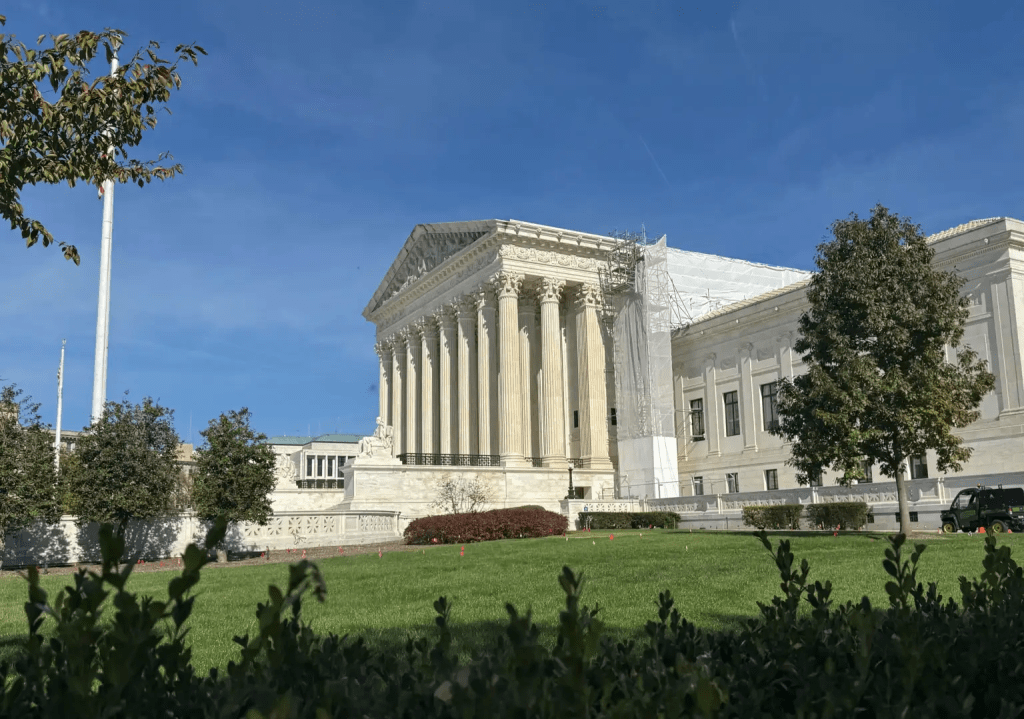
Tariffs, Emergency Powers, and a Supreme Showdown: Can a President Impose Billions in Trade Penalties Without Congress?
The legal landscape surrounding presidential economic powers is poised for a seismic shift. Two small businesses have launched a bold challenge to former President Donald Trump’s sweeping tariff orders—arguing not only that the executive overstepped his authority, but that his actions threaten their very survival.
This case is no longer just about import taxes. It’s about executive power, the limits of the International Emergency Economic Powers Act (IEEPA), and the Supreme Court’s willingness to intervene before lower appellate courts finish their review. With billions of dollars and the constitutional balance of power on the line, this legal drama is unfolding at breakneck speed—and may reshape how trade, emergency powers, and economic policy intersect in the United States.
📦 The Petitioners: Educational Toy Makers vs. Presidential Tariffs
The businesses at the heart of this challenge are Learning Resources and hand2mind, two family-owned companies that manufacture and sell hands-on educational toys for children. Like many American manufacturers, they rely heavily on foreign supply chains—particularly in Asia.
These companies say they are caught in the economic crossfire of presidential power. While their tariff bill was just $2.3 million in 2024, it’s expected to skyrocket to a crippling $100 million in 2025, threatening jobs, revenue, and their very existence.
They argue that former President Trump’s use of IEEPA to impose these tariffs was unlawful. Specifically, they claim that no president in IEEPA’s 50-year history has ever used the statute in this way—to impose sweeping international tariffs under the guise of a national emergency.
🧾 Legal Grounds: What Is the IEEPA?
The International Emergency Economic Powers Act, passed in 1977, grants the president authority to regulate international economic transactions during a declared national emergency involving “unusual and extraordinary threats” to national security, foreign policy, or the economy.
Trump invoked this law in early 2024 to justify a series of executive orders imposing hundreds of billions in tariffs on imports, ostensibly to protect national economic security. But critics argue this interpretation stretches the law beyond its intended bounds—transforming a tool for foreign sanctions into a trade war weapon.
As the petitioners put it:
“Until now, no President has ever used IEEPA to impose tariffs—let alone globally, and at this scale.”
⚖️ Lower Courts Split, Uncertainty Mounts
On May 29, 2025, U.S. District Judge Rudolph Contreras ruled in favor of the companies. He declared the tariffs illegal and said they posed an “existential threat” to the businesses. He temporarily blocked the enforcement of the tariffs, giving the federal government two weeks to appeal.
The Department of Justice promptly appealed to the D.C. Circuit, and Judge Contreras extended the hold on his ruling to allow for the appeal process.
Meanwhile, in a separate case, the Court of International Trade (CIT) also found the tariffs unlawful. But on June 10, the Federal Circuit Court of Appeals issued a stay, putting the CIT’s decision on ice. The result? A chaotic legal environment for businesses that don’t know what tariffs will apply from month to month.
🏛️ Straight to the Top: Supreme Court Petition Filed
On June 11, the toy companies filed an emergency petition to the U.S. Supreme Court, urging the justices to take the case immediately—before the D.C. Circuit can issue a ruling.
Their attorney, Pratik Shah, cited the “paralyzing uncertainty” created when tariffs are “added and subtracted at will.” He argued that allowing the executive branch to wield tariff powers without judicial review is tantamount to unchecked authority.
The petition urges the Supreme Court to:
- Accept the case now, bypassing the appeals process.
- Order a briefing over the summer.
- Schedule oral arguments by September or October 2025.
- Decide whether to take the case before the Court’s summer recess.
Shah pointed out that the Supreme Court has bypassed appellate rulings in other high-stakes, time-sensitive cases—including challenges to the Biden student loan forgiveness plan and the Trump administration’s attempt to add a citizenship question to the 2020 Census.
🔥 Why This Case Matters: The Legal Stakes
This case is about far more than two toy companies.
At its core lies the question: How far can a president go in invoking emergency powers to control economic policy?
If the Court allows Trump’s use of IEEPA to stand:
- It may set a broad precedent allowing future presidents to impose tariffs, sanctions, or other restrictions without Congressional oversight.
- Businesses could face unpredictable economic policies based solely on executive declarations.
- The balance of power between Congress and the White House could shift dramatically in matters of trade.
On the flip side, if the justices strike down Trump’s actions, it would send a strong message about the limits of emergency powers, even during politically turbulent times.
🧠 What Legal Professionals Should Watch
For attorneys, law students, and policy experts, this case is a masterclass in constitutional checks and balances. It combines:
- Administrative law
- Presidential powers
- Economic policy
- And constitutional limits on executive action.
It’s also a textbook example of how a seemingly niche case involving two small companies can escalate into a landmark constitutional battle that touches every corner of American governance.
As we await the Supreme Court’s next move, one thing is clear: the stakes are as high as the tariffs themselves.
#SCOTUS #TrumpTariffs #PresidentialPower #IEEPA #EmergencyPowers #ConstitutionalLaw #LegalNews #AdministrativeLaw #SmallBusinessRights #TariffChallenge #LawTwitter #LegalBlog
Source: https://www.scotusblog.com/2025/06/businesses-challenge-trumps-tariffs-before-supreme-court/
 lawrota.com
Leave a comment