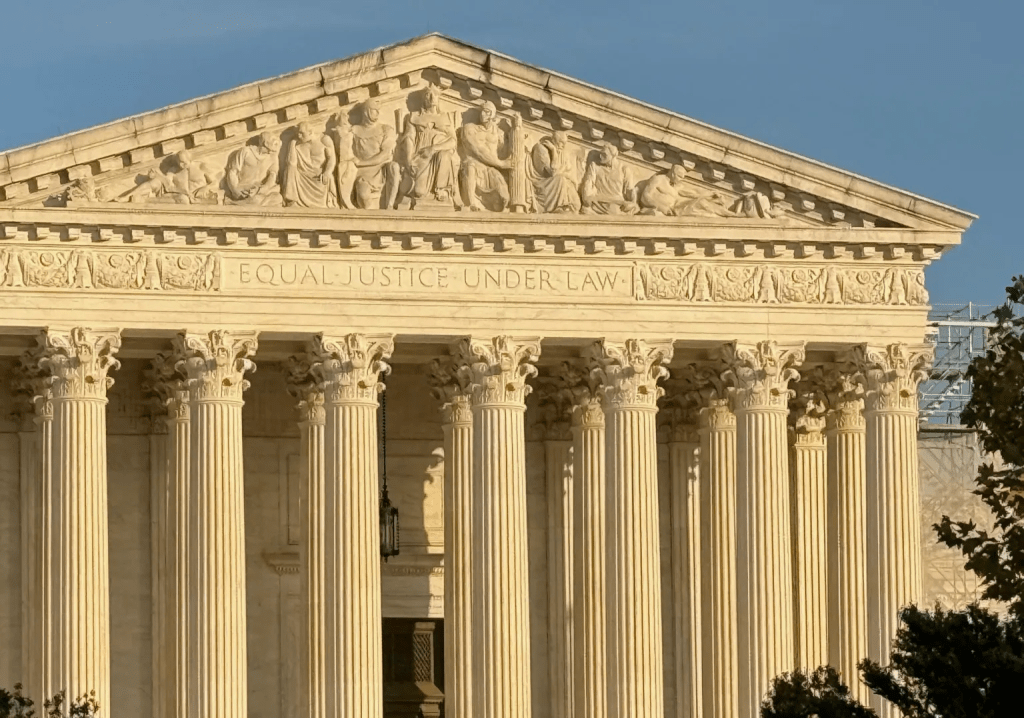
In a high-stakes, unanimously decided case, the U.S. Supreme Court ruled on June 13, 2025, that a Georgia family’s lawsuit against the federal government can proceed after FBI agents mistakenly raided their home during a pre-dawn operation. The ruling breathes new life into the family’s claims under the Federal Tort Claims Act (FTCA), potentially setting new parameters for how courts apply immunity doctrines—particularly the discretionary-function and intentional-tort exceptions.
The case underscores crucial questions at the intersection of federal accountability, constitutional torts, and sovereign immunity—making it a must-watch development for attorneys practicing civil rights law, government litigation, and tort claims against public officials.
The 2017 Raid: A Wrong Address, A Broken Door, and a Terrified Family
In the early hours of a 2017 morning, FBI agents armed with a search warrant descended on a suburban Atlanta home. But instead of executing the raid at 3741 Landau Lane—where gang suspects were believed to be hiding—the agents stormed into 3756 Denville Trace, the residence of Curtrina Martin, her partner Hilliard Toi Cliatt, and Martin’s 7-year-old son.
The error? Special Agent Lawrence Guerra relied on his personal GPS, which led the raid team to the wrong location. Once inside, agents detonated a flash-bang grenade, forcefully removed Cliatt from a closet, and held Martin at gunpoint—half-naked and terrified. It was only after noticing mail addressed to the Denville Trace home that an officer realized the grave mistake.
The Lawsuit and Legal Groundwork Under the FTCA
Martin and Cliatt filed a lawsuit under the Federal Tort Claims Act (FTCA), which provides a limited waiver of the federal government’s sovereign immunity, allowing private citizens to seek damages for harm caused by federal employees acting within the scope of their employment.
Their claims fell into two categories:
- Negligence for the faulty execution of the raid
- Intentional torts such as assault and false imprisonment
However, the FTCA is riddled with exceptions. Two were at issue here:
- Intentional-Tort Exception – bars claims for actions like assault, false arrest, and battery, unless the acts are committed by a law enforcement officer (the so-called law-enforcement proviso).
- Discretionary-Function Exception – bars claims based on decisions involving policy or judgment, typically to prevent courts from second-guessing executive discretion.
The 11th Circuit’s Decision: Immunity Shields the Government
The 11th U.S. Circuit Court of Appeals sided with the government. The panel held that because Agent Guerra had discretion in how he prepared for the raid—including using his personal GPS—the discretionary-function exception applied. As a result, the family’s negligence claim was barred.
While the law-enforcement proviso allowed intentional tort claims to proceed, the court ultimately blocked the case under another FTCA provision: the government is only liable if a private individual in similar circumstances would be liable under state law. The court concluded the agent’s actions aligned with federal policy, absolving the U.S. of liability.
SCOTUS Reverses Course: Gorsuch Recalibrates the Legal Framework
Justice Neil Gorsuch, writing for a unanimous Court, held that the 11th Circuit misinterpreted the FTCA, particularly the interaction between the law-enforcement proviso and other immunity exceptions.
Key holdings:
- The law-enforcement proviso only modifies the intentional-tort exception, not the entire FTCA. This means courts cannot use the proviso to override other exceptions, like the discretionary-function clause.
- The 11th Circuit’s standard—that government actions are immune if they align with federal policy—is flawed. The correct standard requires asking whether a private person under similar circumstances would be liable under state law.
Gorsuch sent the case back for further analysis on whether the discretionary-function exception applies, but made clear that courts must focus on state tort law analogs, not vague federal compliance standards.
Sotomayor’s Concurring Opinion: Questioning Discretion Gone Too Far
Justice Sonia Sotomayor, joined by Ketanji Brown Jackson, filed a concurring opinion suggesting the discretionary-function exception shouldn’t apply in this scenario at all.
She emphasized:
“Executing a warrant always involves some discretion. But it’s hard to see how using personal GPS and failing to verify a house number involve the kind of policy decisions that immunity is meant to protect.”
Her opinion opens the door for future litigation to question whether certain types of “discretion” truly deserve immunity—particularly when they result in constitutional or grossly negligent violations.
Implications for Practitioners and the Path Ahead
The ruling has two key implications:
- Broader Access to Legal Remedies – Victims of federal law enforcement misconduct may have a clearer path to sue under the FTCA, especially for intentional torts.
- Narrowing Immunity Doctrines – Courts may need to reevaluate how liberally they apply the discretionary-function exception, especially when gross errors like wrong-house raids occur.
The family’s legal team from the Institute for Justice celebrated the ruling. In their view, it affirms a crucial principle:
“Federal officers lack the discretion to raid the wrong house—or more broadly, to act unconstitutionally or carelessly in their work.”
Curtrina Martin added,
“This isn’t over, but we look forward to continuing the fight. This victory is not just for us—it’s for everyone demanding accountability.”
#FTCA #WrongHouseRaid #FBIAccountability #SCOTUS2025 #LegalRights #TortLaw #CivilRightsLitigation #FederalImmunity #LawEnforcementLiability #LegalReform
 lawrota.com
Leave a comment