— How One Unanimous Decision Could Reshape Disability Rights in Education Law
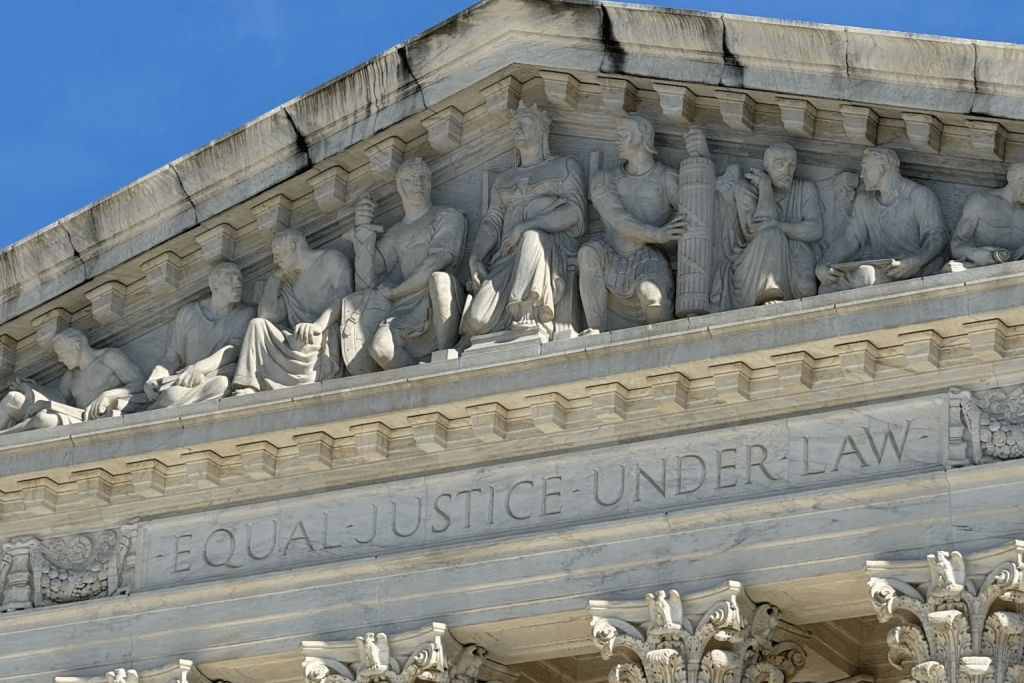
In a landmark unanimous ruling on June 13, 2025, the U.S. Supreme Court made a powerful statement in defense of equal protection under federal disability law, reaffirming that students with disabilities are entitled to the same legal standards as any other individual under anti-discrimination statutes.
The case, A.J.T. v. Osseo Area Schools, asked a deceptively simple question with profound implications: Do students with disabilities face a tougher legal standard when suing schools for discrimination than others do in non-educational settings?
In a decisive 9-0 opinion authored by Chief Justice John Roberts, the Court said no—reiterating that public schools are not immune from standard anti-discrimination law simply because education is involved.
The Legal Framework: Discrimination & Disability Rights in Education
At the heart of the dispute were two pivotal federal laws:
- Section 504 of the Rehabilitation Act of 1973
- Title II of the Americans with Disabilities Act (ADA)
Together, these statutes prohibit discrimination “on the basis of disability” by public institutions—including public schools.
They operate alongside the Individuals with Disabilities Education Act (IDEA), which specifically governs how schools provide tailored services (via Individualized Education Programs, or IEPs) to children with disabilities.
Historically, lower federal courts often required plaintiffs in education-related cases to meet a higher standard—namely, showing intentional discrimination—to recover damages, whereas in other settings, deliberate indifference was enough. This effectively made it harder for children in public schools to win damages than adults in similar situations.
SCOTUS Delivers a Unified Answer
Chief Justice Roberts dispelled that double standard once and for all. Writing for the full Court, he ruled that claims of discrimination in schools should be evaluated using the same legal thresholds applied outside of the educational context.
Roberts emphasized that the statutory language is unambiguous. The laws grant protections to “any person,” a term he called “expansive and unqualified,” meaning it covers every person with a disability—students included—without distinction.
In other words, a disabled child alleging discrimination by a school district does not need to show the school acted with “bad faith” or “malicious intent” to seek relief under the ADA or Section 504. The same deliberate indifference standard applies.
Where Lower Courts Got It Wrong
Lower courts had crafted a higher standard for students largely to reconcile conflicts between the ADA/Section 504 and the IDEA, which is more procedural in nature. Some circuits feared allowing damages for discrimination would undermine IDEA’s complex IEP dispute-resolution process.
But as Roberts explained, Congress already resolved that tension when it enacted Section 1415(l) of IDEA, which explicitly says nothing in IDEA limits or restricts relief available under other disability laws.
In short: IDEA may govern how schools must accommodate, but the ADA and Rehabilitation Act govern whether discrimination occurred—and Congress meant for both avenues to remain open.
Concurring Opinions Reveal Deeper Divisions
Though the opinion was unanimous, two notable concurrences revealed ideological cracks in the Court’s long-term approach to disability law.
- Justice Clarence Thomas, joined by Justice Brett Kavanaugh, expressed concern over liability without proving intent, signaling skepticism toward the idea that schools could be punished for mere indifference.
- In contrast, Justice Sonia Sotomayor, joined by Justice Ketanji Brown Jackson, emphasized the historical and civil rights motivations behind disability law. She warned that inserting an intent requirement into civil enforcement would gut the very heart of these protections.
Her concurrence argued that ADA’s original vision—like ensuring buildings had wheelchair access—would have failed if plaintiffs had to prove intent, rather than simply showing exclusion.
Why This Decision Matters
This case solidifies a uniform national standard: children with disabilities are not second-class citizens in court. They can hold schools accountable using the same tools and standards available in workplaces, public buildings, or healthcare.
For civil rights attorneys, education lawyers, and disability advocates, this ruling:
- Levels the legal playing field for students
- Protects access to damages for discriminatory treatment
- Clarifies the interaction between IDEA and broader anti-discrimination laws
For school districts, the takeaway is clear: the protections under ADA and Section 504 are not merely procedural—they are substantive, enforceable, and carry liability.
Looking Ahead: Unanswered Questions Remain
The Supreme Court declined to resolve one looming issue: whether bad faith or intentional discrimination should ever be required for damages under federal disability law.
This leaves open the possibility of future battles over the standard of proof in different contexts. But for now, students with disabilities no longer face a steeper legal climb just because they are in a classroom.
The Court’s clear message: anti-discrimination law means what it says—for everyone.
#DisabilityRights #SCOTUS2025 #EducationLaw #ADACompliance #Section504 #StudentsWithDisabilities #CivilRightsLaw #LegalUpdate #InclusiveEducation #SupremeCourtRuling
 lawrota.com
Leave a comment