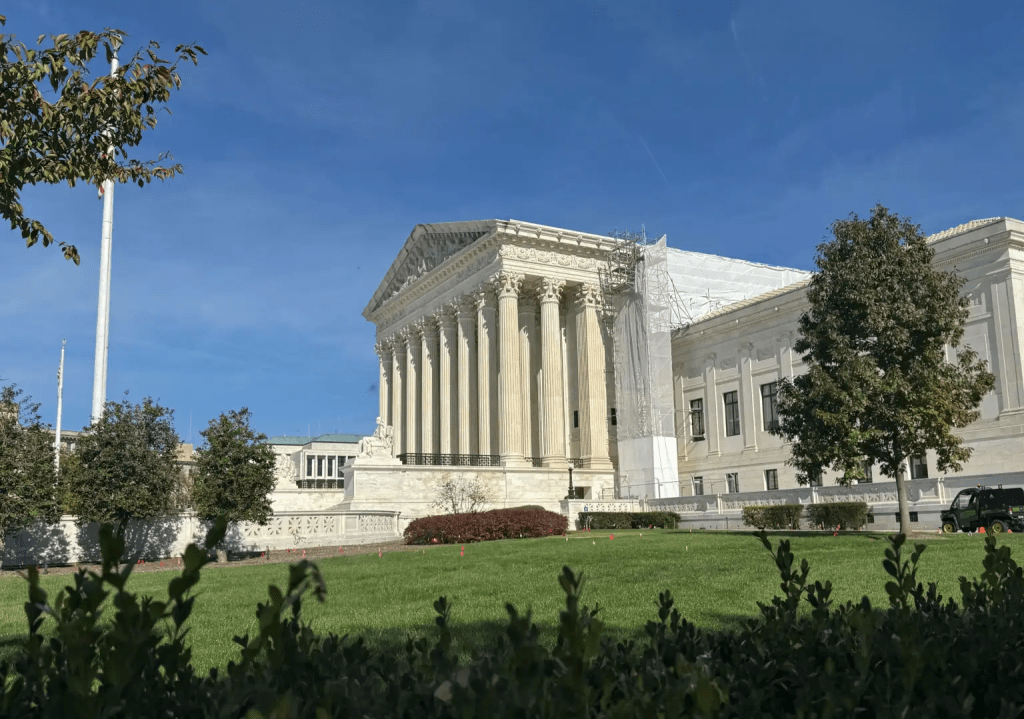
In a case that pits executive ambition against constitutional checks and balances, a coalition of labor unions, local governments, and advocacy organizations has taken a strong legal stance against former President Donald Trump’s plan to execute mass layoffs within the federal workforce. The plaintiffs are urging the Supreme Court not to lift a federal court order that currently blocks the implementation of Trump’s executive directive to downsize government agencies significantly.
This dispute isn’t just about employment numbers—it strikes at the heart of executive authority, congressional oversight, and the lawful boundaries of reorganizing the federal government.
🔍 The Controversial Executive Order
In February, Trump issued an executive order instructing federal agencies to prepare for sweeping “reductions in force” (RIFs), essentially large-scale layoffs of federal employees. Accompanying this directive were internal memoranda from the Office of Management and Budget (OMB) and the Office of Personnel Management (OPM) instructing agencies to act promptly.
Supporters view the plan as part of a broader effort to “drain the swamp” and reduce bureaucratic overhead. But critics argue that such moves could dismantle statutorily mandated government functions, eliminate critical public services, and cost hundreds of thousands of federal workers their jobs—without proper legislative authority.
⚖️ Legal Pushback Begins in Federal Court
The legal battle commenced in federal court in San Francisco, where Senior U.S. District Judge Susan Illston first issued a temporary restraining order (TRO) to pause the implementation of the executive order. She then escalated her response by issuing a preliminary injunction, which has a longer-lasting impact and effectively freezes Trump’s plan while litigation unfolds.
The preliminary injunction prohibits any agency-level implementation of RIFs as ordered by the executive branch. Judge Illston also ordered the government to hand over key documents related to these workforce cuts—indicating the seriousness with which the court views transparency and procedural fairness in this case.
⚖️ The Supreme Court Enters the Picture
Initially, U.S. Solicitor General D. John Sauer appealed to the Supreme Court on May 16, asking the justices to block the lower court’s injunction. However, Sauer temporarily withdrew the request following the issuance of the preliminary injunction. Once the U.S. Court of Appeals for the 9th Circuit refused to stay Judge Illston’s order, the Trump administration returned to the Supreme Court, asking it to lift the block and allow the executive order to proceed.
In the request, Sauer framed the issue as one of executive prerogative, arguing that the federal judiciary was overstepping by interfering with the President’s legal authority to control internal operations and manage staffing within the executive branch.
🧾 The Constitutional Argument: Who Really Has the Power?
The challengers have mounted their argument on a deeply constitutional foundation: unilateral action by the President, without congressional approval, undermines the separation of powers.
They argue that for over a century, both Republican and Democratic presidents have sought explicit authorization from Congress before embarking on large-scale reorganizations of the federal government. Even Trump himself, during his first term, requested congressional approval for similar plans—approval that Congress declined to grant.
Their warning is stark: allowing the executive order to proceed now would effectively permit irreversible downsizing of the federal workforce before courts can determine whether the action is even constitutional. If the judiciary were to act too late, essential programs and services could be dismantled, leaving legal recourse meaningless—“there will be no way to unscramble that egg.”
💡 What’s at Stake
This case presents several critical legal questions that practicing lawyers, government attorneys, and law students should watch closely:
- Executive Authority: Can the President unilaterally order mass reorganizations of the federal government without explicit legislative approval?
- Checks and Balances: How far can courts go to prevent potential abuse of executive power?
- Federal Employment Rights: What procedural protections are owed to federal workers facing mass terminations?
- Separation of Powers: How do courts navigate executive discretion versus constitutional mandates?
Regardless of one’s political leanings, the outcome of this case could significantly shift the legal framework surrounding federal workforce governance and executive power.
#TrumpRIF #ExecutivePower #SCOTUS2025 #FederalWorkforce #ConstitutionalLaw #SeparationOfPowers #LegalNews #LaborRights #PublicServiceLaw #LawStudentWatch #AdministrativeLaw
 lawrota.com
Leave a comment