High-stakes legal battle over federal workforce reduction ignites constitutional, administrative, and separation-of-powers debate.
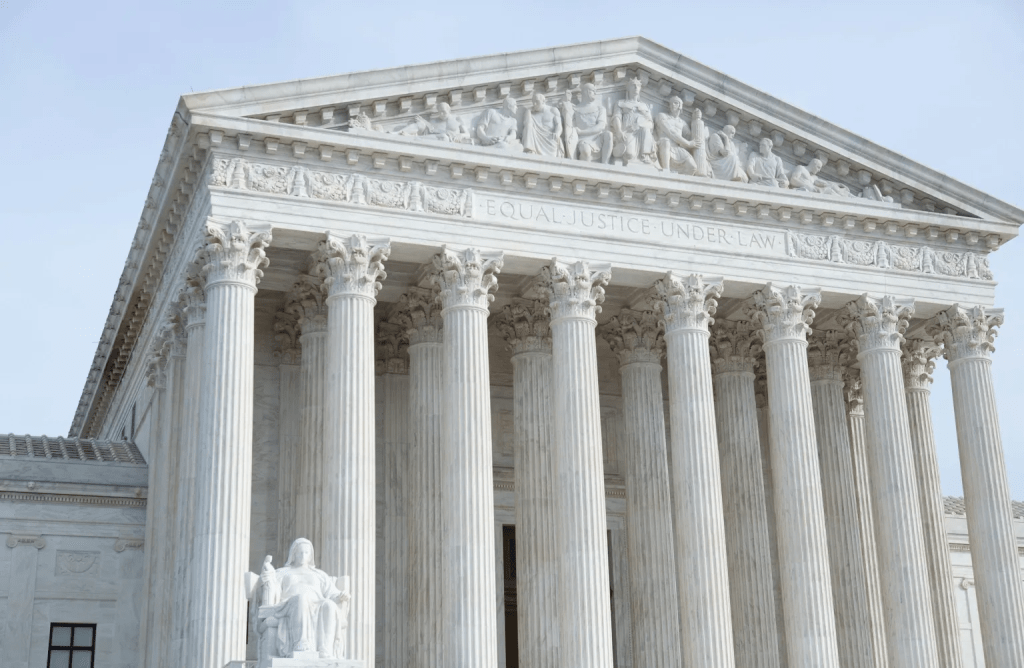
Trump Administration Asks Supreme Court to Intervene in Department of Education Employee Reinstatement Case
A constitutional clash over executive authority, administrative oversight, and federal workforce rights unfolds at the nation’s highest court.
In a rapidly developing legal and political controversy, the Trump administration has filed an emergency request with the U.S. Supreme Court, seeking to pause a federal court order that mandates the reinstatement of nearly 1,400 Department of Education (DOE) employees terminated as part of a broad reduction in force (RIF). The case, which stems from actions initiated in March 2025, could significantly influence future administrative restructuring efforts and set new precedent in executive power, standing doctrine, and judicial oversight of federal employment practices.
Background: A Strategic Reduction—and a Legal Firestorm
On March 11, 2025, the DOE, under the direction of Secretary Linda McMahon, implemented a major RIF, terminating 1,378 federal employees. According to U.S. Solicitor General D. John Sauer, the move was part of President Trump’s broader plan to “streamline the Department” and eliminate discretionary federal functions that the administration believed were better handled at the state level.
Shortly thereafter, President Trump issued an executive order (March 20) directing the Secretary of Education to “take all necessary steps to facilitate the closure of the Department.” This was followed by the administration’s decision to reassign core DOE responsibilities, including federal student loan management and special education programming, to other agencies.
These sweeping actions triggered immediate legal opposition from a coalition of blue states (led by New York), the District of Columbia, teachers’ unions, and public school districts. They filed suit in a Massachusetts federal district court, arguing that the RIF and agency dismantling violated both statutory protections governing federal administrative bodies and constitutional limits on executive power.
District Court Responds: Judge Joun Blocks the RIF
On May 30, 2025, U.S. District Judge Myong Joun issued a preliminary injunction halting the DOE’s RIF, requiring the reinstatement of the fired employees, and barring the transfer of essential functions like student loans and special needs services to other federal agencies.
Judge Joun’s opinion was unequivocal: he found that the administration’s underlying goal was not just restructuring, but de facto dissolution of the Department of Education. In the court’s view, no statute gave the executive branch authority to unilaterally dismantle a federal agency. He further held that the RIF’s scope would “cripple the Department’s ability to meet its statutory obligations”—especially considering it was already underperforming before the cuts.
Joun’s language was strikingly direct:
“The Department was already struggling to meet its goals… A RIF of this magnitude will likely cripple the Department.”
The Trump Administration Fires Back at SCOTUS
In a 40-page emergency filing on June 14, Solicitor General Sauer asked the Supreme Court to pause Judge Joun’s injunction while the case is appealed to the 1st Circuit and potentially to the high court.
Sauer’s arguments centered on three core themes:
- Judicial Overreach: He accused Judge Joun of overstepping judicial authority by effectively usurping control of the executive branch’s internal workforce decisions.
- Lack of Standing: Sauer argued the challengers—states, unions, and districts—lacked standing because their claims were rooted in hypothetical harms tied to slower or lower-quality services, rather than direct injury.
- Separation of Powers and Procedural Error: He contended that if anyone can challenge the RIFs, they must do so before the Merit Systems Protection Board (MSPB), not in federal court. According to Sauer, allowing the injunction to stand would inflict “permanent harm” on the government, including irrecoverable salary costs and significant administrative burdens.
He emphasized that:
“The government will be forced to pay salaries it cannot recoup and undertake a massive administrative task to rehire employees—only to potentially lay them off again.”
A Constitutional Flashpoint in the Making
This case brings together key constitutional and administrative law issues that could reverberate through future litigation:
- Can the President dismantle or severely restructure a federal agency without explicit congressional approval?
- What is the judiciary’s role in overseeing federal workforce reductions, especially during executive-led reforms?
- Who has legal standing to challenge federal agency decisions that indirectly affect public services?
Given the sharp ideological divides embedded in these questions, the case could set the stage for a major Supreme Court showdown, even if the justices decide only the procedural question for now.
Looking Ahead: Supreme Court Response Pending
The Court gave the opposing parties a tight deadline—Friday, June 13 at 4:00 p.m.—to file their responses. Whether the Court grants an emergency stay, or lets the 1st Circuit take the lead, will likely signal how the justices view judicial intervention in executive branch reorganizations going forward.
In an election year where the power of federal agencies is increasingly under scrutiny, this legal saga is far from over. Whether seen as an administrative efficiency play or a politically charged dismantling, the attempt to shutter major federal education functions is now center stage before the nation’s highest court.
#SCOTUS #LegalNews #TrumpAdministration #DepartmentOfEducation #FederalEmployees #AdministrativeLaw #RIF #ExecutivePower #StandingDoctrine #EducationLaw #ConstitutionalLaw
 lawrota.com
Leave a comment