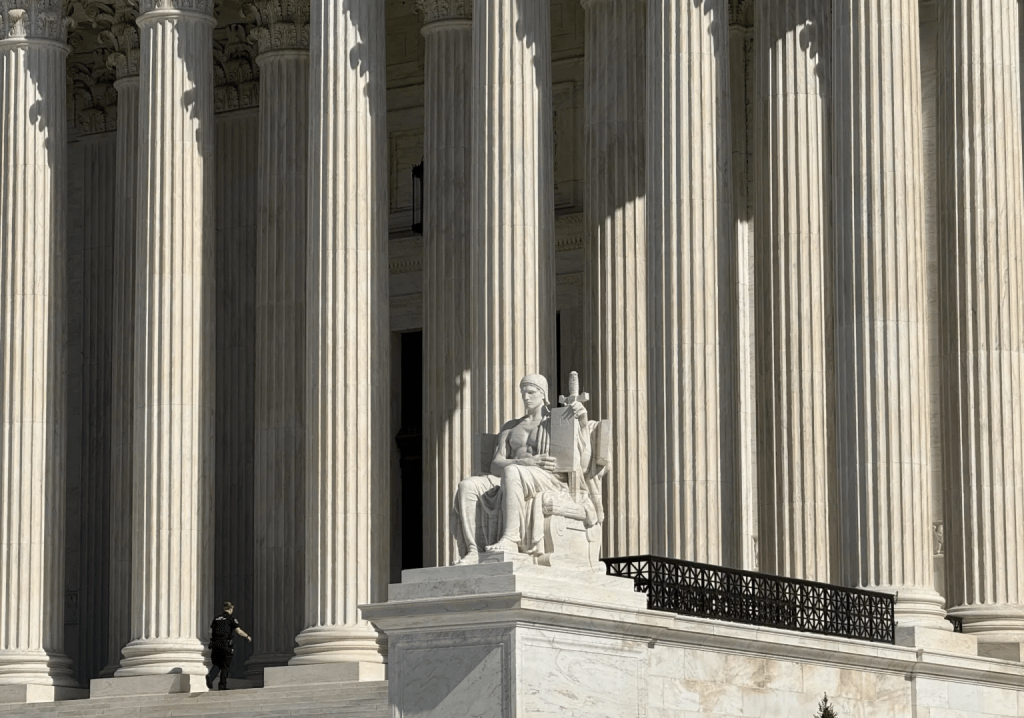
In a case that highlights the tension between immigration enforcement and human rights protections, a group of immigrants is challenging a federal government policy that allows deportation to third-party countries — nations not listed in their original removal orders. The controversy has now reached the Supreme Court, raising significant constitutional, procedural, and humanitarian concerns about how far the U.S. government can go when executing deportations.
At the heart of the case is an order by U.S. District Judge Brian Murphy of Massachusetts, which temporarily blocks the government from removing certain immigrants to third countries without first ensuring they won’t be tortured. This order stems from a legal challenge by four immigrants, all facing deportation, who argued that a new Department of Homeland Security (DHS) directive exposes them to grave danger without due process protections.
The Supreme Court has been asked to intervene by the government — specifically U.S. Solicitor General D. John Sauer, who is seeking to pause Murphy’s order while the litigation continues. Sauer argues the ruling hinders the removal of what he described as “the worst of the worst illegal aliens,” including individuals the government is attempting to deport to South Sudan — despite Murphy’s ruling that such a move violated legal procedures. Those individuals are currently being held at a U.S. military base in Djibouti.
But the immigrants’ legal team sees it differently. Their 40-page response, filed in late May, urges the Court to uphold Murphy’s order, stating that the government is not being prohibited from removing individuals to third countries — only that it must follow the law when doing so.
🔍 The Legal and Procedural Backdrop
The dispute began in March 2025, after DHS issued internal guidance allowing immigration officials to deport individuals with final removal orders to countries not listed in those orders — if their original deportation was delayed due to risks of torture in their home country.
On March 30, the Trump administration added further instructions, laying out the steps that DHS must follow before removing immigrants to unnamed third-party countries that haven’t provided diplomatic assurances that returnees won’t face torture.
The plaintiffs, four immigrants under final removal orders, filed a lawsuit in federal court, arguing that this policy leaves them vulnerable to being deported to dangerous, unfamiliar countries without prior notice and without a meaningful opportunity to challenge the decision. In short, they claimed it violates due process and U.S. obligations under international human rights law, particularly the Convention Against Torture (CAT).
Judge Murphy agreed in part, issuing a temporary injunction. He barred the government from carrying out these removals unless it notified individuals and their legal counsel in writing which third-party country they would be sent to, and gave them a reasonable opportunity to challenge that removal.
⚖️ Why This Case Matters
At stake is a fundamental legal principle: whether the federal government can sidestep established removal orders and send immigrants to alternative nations — without appropriate procedural safeguards — even when credible fears of torture or death exist.
The government claims the court’s ruling complicates foreign diplomacy and immigration enforcement, especially in cases involving “undesirable” individuals. But the immigrants’ lawyers argue that the real chaos stems from the government’s own unlawful actions — bypassing procedural protections and attempting removals “as a punitive measure” to countries with well-documented violence and human rights abuses.
The Trump administration’s appeal focuses on what it calls “judicial overreach,” arguing that Murphy’s order creates unauthorized legal hurdles. However, the immigrants point out that Murphy’s ruling simply requires the government to comply with existing laws — laws that already prohibit removal to countries where torture is likely, unless certain steps are taken.
This isn’t about creating new rights — it’s about upholding existing ones.
🚨 Potential Outcomes and Broader Implications
If the Supreme Court sides with the government, it could effectively gut procedural protections for immigrants facing third-country deportations. DHS could deport individuals — with little to no warning — to places where they risk torture, imprisonment, or even death.
Such a move could also undermine U.S. compliance with international treaties, including CAT, and potentially weaken judicial oversight of executive immigration policies.
If the Court upholds Murphy’s injunction, it would reinforce the principle that immigration enforcement cannot come at the cost of human dignity and legal due process. It would also send a strong message that the federal government must act within the boundaries of the law, even in contentious or politically charged contexts.
#ImmigrationLaw #SupremeCourt #DueProcess #DeportationDefense #SCOTUSWatch #LegalRights #HumanRights #ThirdCountryRemoval #CATTreaty #ImmigrantJustice #LawyersForJustice
 lawrota.com
Leave a comment