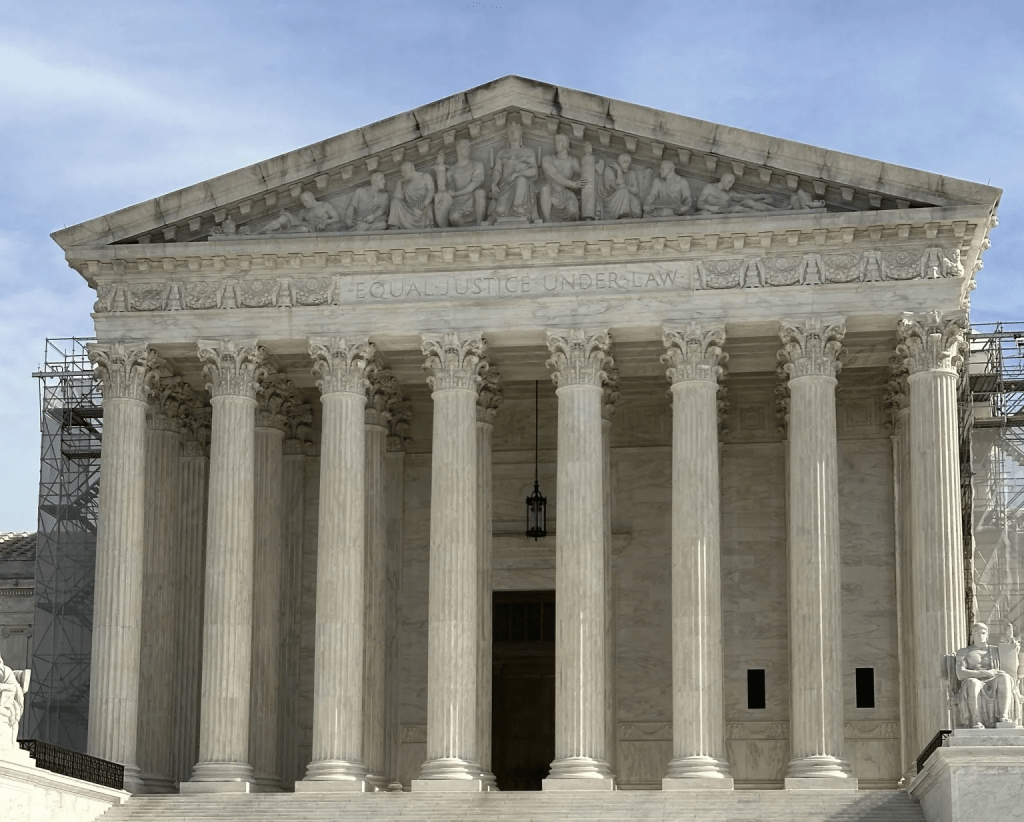
In yet another high-stakes confrontation between executive power and judicial oversight, the Trump administration has returned to the U.S. Supreme Court, seeking permission to move forward with a controversial executive order that would initiate sweeping reductions in the federal workforce. This legal clash—Trump v. American Federation of Government Employees—raises significant constitutional questions about executive authority, separation of powers, and the rights of federal employees.
The heart of the conflict lies in a February executive order from former President Donald Trump directing federal agencies to “promptly undertake preparations to initiate large-scale reductions in force (RIFs), consistent with applicable law.” The administration argues this is a lawful internal policy tool to streamline federal operations and reduce bureaucracy. However, a coalition of labor unions, local governments, and advocacy groups claim the order oversteps constitutional boundaries, undermines statutory protections for civil servants, and bypasses necessary legal and procedural safeguards.
The legal back-and-forth began when these groups filed suit in a federal district court in San Francisco. Senior U.S. District Judge Susan Illston responded with a temporary restraining order (TRO) on May 9, halting the Trump administration from initiating or planning any reductions in force under the order. The judge also required the administration to turn over related documentation—an attempt to ensure transparency in decision-making.
The U.S. Solicitor General, D. John Sauer, first approached the Supreme Court on May 16, asking for the TRO to be put on hold, arguing that the injunction caused “ongoing and severe harm” to the government by interfering with executive operations. However, that request was soon withdrawn on May 23, when Judge Illston replaced her TRO with a preliminary injunction, signaling a shift from temporary emergency relief to a more considered judicial stance.
Notably, the preliminary injunction had been appealed to the 9th U.S. Circuit Court of Appeals. However, after a divided panel of that court declined to pause Judge Illston’s injunction, Sauer returned to the Supreme Court, repeating many of his original arguments and requesting an administrative stay. This would temporarily freeze Illston’s order while the high court weighs whether to intervene further.
At stake in this battle is more than just the future of a federal executive order. This case exemplifies the delicate balancing act between executive discretion in managing government resources and the judiciary’s responsibility to uphold the rule of law. If the executive branch can issue broad workforce reduction orders without meaningful oversight, critics argue it could erode employment protections for millions of federal workers and destabilize the merit-based civil service system.
Supporters of the Trump administration’s move assert that RIFs are well within presidential authority and that the executive branch must have leeway to manage its operations effectively, especially in times of fiscal constraint. They claim Judge Illston’s nationwide injunction sets a dangerous precedent by tying the hands of the federal government.
Meanwhile, legal observers are closely watching how the Supreme Court responds. Although the justices have not yet instructed the plaintiffs to file a response, their eventual decision—whether to grant a stay, hear the case in full, or decline to intervene—could have lasting implications for administrative law, federal labor policy, and the scope of presidential power.
This case also fits within a broader pattern of Trump-era legal showdowns over the limits of executive orders, with federal courts increasingly playing a pivotal role in moderating unilateral presidential actions.
As the legal proceedings unfold, practitioners and law students alike are reminded that even executive orders are not immune from judicial scrutiny. The rule of law requires that governmental power, even at its highest levels, be exercised within the constraints of the Constitution and statutory framework.
Whether the Supreme Court ultimately steps in or not, Trump v. AFGE will likely become a cornerstone case in discussions about executive overreach, judicial independence, and the evolving nature of federal employment law.
#LegalNews #SCOTUS #TrumpvAFGE #FederalJobs #RIFs #AdministrativeLaw #ExecutiveOrders #CivilServiceRights #LawBlog #LegalUpdates #SeparationOfPowers
 lawrota.com
Leave a comment