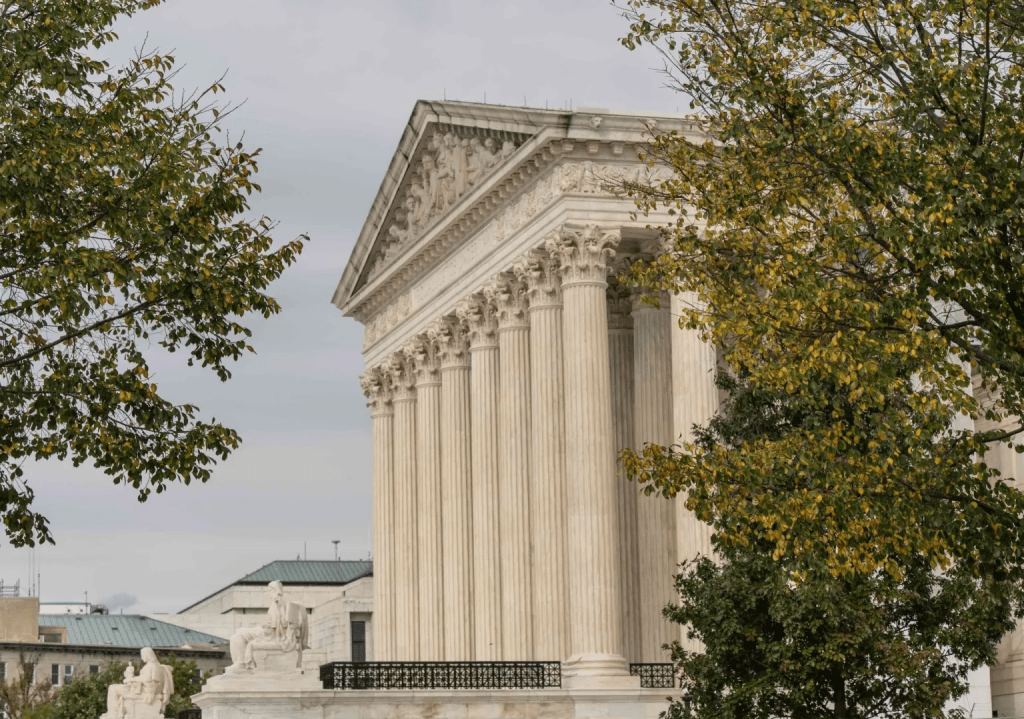
The U.S. Supreme Court has added four new high-stakes cases to its 2025-26 term docket — and they’re packed with constitutional questions, political implications, and government accountability challenges. From mail-in voting battles and Fourth Amendment boundaries to contractor immunity in immigration detention centers and government liability in overseas combat zones, these cases will shape vital aspects of American law. Here’s your deep dive into what’s coming — and why every practicing attorney and law student should be paying attention.
1. Voting Rights Under Fire: Bost v. Illinois State Board of Elections
At the heart of Bost v. Illinois State Board of Elections is a challenge to Illinois’ mail-in ballot system, which permits ballots postmarked by Election Day to be counted up to two weeks afterward. Congressman Michael Bost and two presidential electors argue that this practice effectively extends Election Day beyond what federal law permits and dilutes timely votes, infringing upon both federal statutes and constitutional protections.
Lower courts dismissed the case citing a lack of standing — a procedural gatekeeping doctrine. But the Supreme Court has now agreed to hear the case, signaling a potential new chapter in the ever-contentious battle over election laws. If the Court finds that candidates and electors do have standing, it could open the door for numerous legal challenges to state-level election procedures.
Key Issue: Can state laws allowing extended mail-in ballot counting stand under federal election statutes and the Constitution?
2. Fourth Amendment Flashpoint: Case v. Montana
Next is a showdown over the limits of warrantless home entry by police. William Trevor Case was shot by officers who entered his home without a warrant after reports of suicidal threats and possible danger to law enforcement. The Montana Supreme Court upheld the entry under the “community caretaker” doctrine, which permits police to act without a warrant when someone’s welfare is at stake.
Now, the U.S. Supreme Court will determine whether mere reasonable belief of danger justifies such an intrusion, or if probable cause of an actual emergency is required under the Fourth Amendment. This ruling could either reinforce or recalibrate the delicate balance between personal privacy and police discretion.
Key Issue: Must police have probable cause of an emergency, or is a reasonable belief of need enough to justify warrantless entry?
3. Private Contractors and Sovereign Immunity: The GEO Group v. Menocal
In a class action lawsuit involving detainees at a Colorado immigration facility operated by The GEO Group, the plaintiffs allege forced labor practices and low-wage exploitation. GEO argues that, as a government contractor performing duties on behalf of ICE, it should be immune from suit — and that it should be allowed to appeal the denial of that immunity immediately, rather than await the end of trial.
The 10th Circuit disagreed, finding the issues too intertwined with the merits of the case to qualify for an immediate appeal under the “collateral order doctrine.” The Supreme Court will now determine whether sovereign immunity claims from contractors can bypass this procedural rule.
Key Issue: Should private government contractors be granted early appeal rights on immunity claims, even when litigation is ongoing?
4. Combatant Activities & Government Liability: Hencely v. Fluor Corporation
Winston Hencely, a U.S. Army soldier, was severely injured in a 2016 suicide bombing at a military base in Afghanistan. He sued Fluor Corporation, a government contractor, claiming negligence in hiring and supervising the attacker. The 4th Circuit dismissed his claims under the Federal Tort Claims Act’s “combatant activities” exception.
The Supreme Court is now poised to decide how far this exception extends — particularly when private contractors are involved. This case touches not only military policy but also the future accountability of contractors in warzones.
Key Issue: Does the “combatant activities” exception to government liability shield military contractors from lawsuits like Hencely’s?
What Was Denied? Notable Petitions Rejected
- Gun Control Challenges: The Court declined to review firearm regulations from Maryland and Rhode Island.
- Civil Rights Setback: Nicholson v. W.L. York
In a disappointing move for civil rights advocates, the Court refused to revive Chanel Nicholson’s case alleging racial discrimination in employment. The 5th Circuit dismissed her case as time-barred, rejecting her argument that newer discriminatory acts should reset the statute of limitations. Justice Jackson, joined by Sotomayor, issued a sharp dissent calling the lower court’s reasoning “patently erroneous.”
#SCOTUS #SupremeCourt2025 #ElectionLaw #FourthAmendment #CivilRightsLaw #GovernmentContractors #ImmigrationDetention #LegalNews #ConstitutionalLaw #LawStudents #LegalPractice #FederalLaw
Source: https://www.scotusblog.com/2025/06/supreme-court-adds-four-cases-to-next-terms-docket-2/
 lawrota.com
Leave a comment