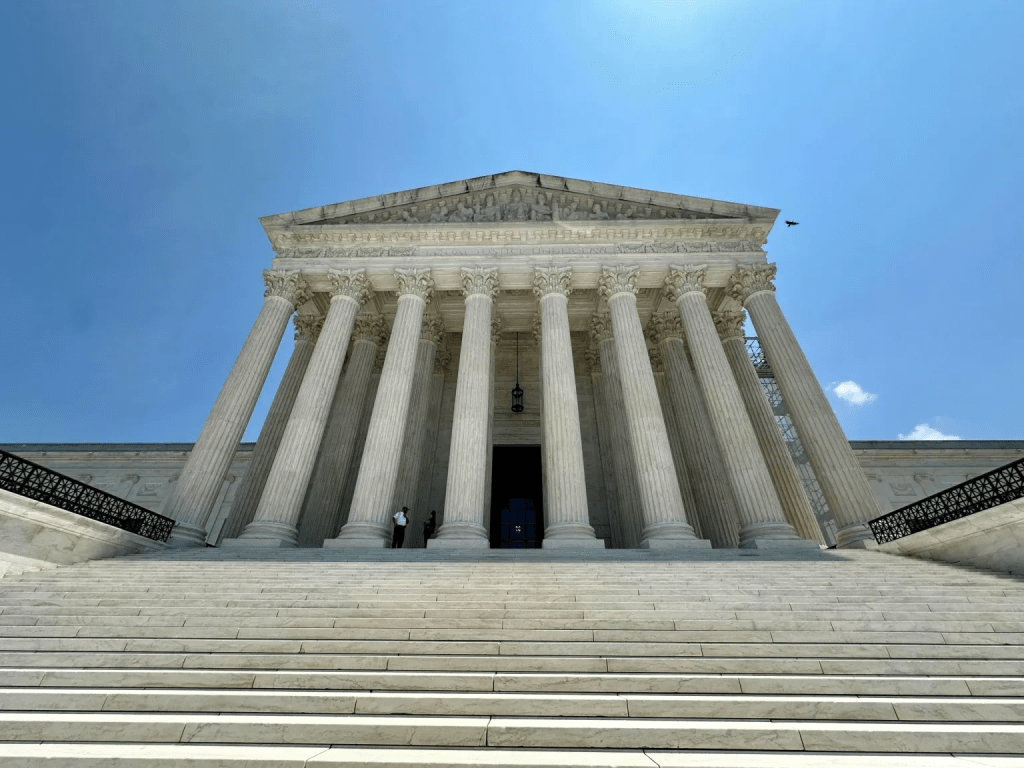
SCOTUS Appoints Outside Counsel in High-Stakes Restitution Case: Will MVRA Survive Constitutional Scrutiny?
In a rare but significant move, the U.S. Supreme Court has appointed prominent appellate litigator John Bash to argue a key restitution case this fall, Ellingburg v. United States, after the federal government declined to defend the lower court’s reasoning. At stake is whether a provision of the Mandatory Victims Restitution Act (MVRA) violates the Ex Post Facto Clause of the Constitution.
This legal showdown is not just about one man’s restitution bill—it could redefine how courts interpret the constitutional limits on retroactive punishment, with major implications for criminal and civil liability nationwide.
The Core Legal Issue: Restitution vs. Punishment
At the heart of the case is Holsey Ellingburg, a Georgia man convicted in a bank robbery case and sentenced to nearly 27 years in prison, along with a restitution order under the MVRA. Passed in 1996, the MVRA mandates restitution for victims in certain federal crimes and is often applied regardless of whether the defendant has the present ability to pay.
Ellingburg argues that this restitution order, applied retroactively in his case, amounts to a criminal punishment, not a civil remedy. If the Supreme Court agrees, it could violate the Ex Post Facto Clause—a constitutional provision that forbids the government from retroactively increasing the punishment for a crime.
The government initially argued that restitution under the MVRA is not punitive in nature and thus not subject to ex post facto restrictions. The 8th U.S. Circuit Court of Appeals agreed, holding that the restitution imposed on Ellingburg was a civil measure aimed at compensating victims, not punishing offenders.
But there’s a catch: the Solicitor General, D. John Sauer, informed the Supreme Court in May that the federal government would no longer defend that rationale. That left the Court with a decision to make—dismiss the case or find a way to still hear both sides.
Enter John Bash: Court-Appointed Advocate
To ensure the case is argued fully and fairly, the Supreme Court appointed John Bash, a seasoned appellate attorney, former U.S. Attorney, and one-time clerk for Justice Scalia and Judge Brett Kavanaugh. Bash, now with Quinn Emanuel in Austin, has argued ten Supreme Court cases and brings deep expertise in constitutional and criminal law.
Bash will appear as an amicus curiae (friend of the court), tasked with defending the 8th Circuit’s conclusion that MVRA restitution is civil in nature and thus not barred by the Constitution’s prohibition on retroactive punishments.
Why the Court’s Move Matters: Separation of Powers and Legal Continuity
While the appointment of outside counsel is not without precedent—SCOTUS typically does this once or twice per term—the decision reflects the importance and complexity of this case. The government’s refusal to defend a lower court ruling is rare, and when it happens, the Court often steps in to protect legal adversarial integrity.
This term, the Court has appointed outside counsel five times—a significant uptick that suggests a broader trend of legal ambiguity or institutional hesitation within the Executive Branch on major constitutional questions.
Additionally, this move reinforces the principle that courts—not just the Executive—have a role in interpreting law and ensuring that all arguments are fairly heard, particularly when constitutional rights are in question.
The Broader Implications: Redefining Restitution Nationwide?
If the Supreme Court sides with Ellingburg, it could fundamentally alter how restitution statutes like the MVRA are interpreted. Courts would have to scrutinize whether these financial penalties are punitive or compensatory—a distinction that carries immense legal consequences.
Such a ruling might:
- Require stricter limits on restitution for crimes committed before the MVRA’s enactment.
- Open the door for thousands of inmates and ex-offenders to challenge prior restitution orders.
- Force Congress to revise restitution laws to withstand constitutional review.
On the flip side, if the Court affirms the 8th Circuit’s ruling, the MVRA and similar statutes may be deemed constitutionally secure—even when applied retroactively.
Who Is John Bash, and Why Was He Chosen?
John Bash is a legal heavyweight. Beyond his clerkships and Supreme Court experience, Bash briefly entered Texas politics, announcing a campaign for state attorney general before withdrawing due to a family health issue. His reputation for sharp legal reasoning and experience in high-stakes federal cases made him an obvious candidate to defend the Court’s interest in balanced arguments.
With Bash now leading the defense of the 8th Circuit’s logic, expect a nuanced, high-level constitutional debate when the justices hear oral arguments in the fall.
#SCOTUS #RestitutionLaw #MVRA #CriminalLaw #JohnBash #ExPostFacto #LegalNews #LawStudents #FederalLaw #ConstitutionalLaw #SupremeCourt2025 #EllingburgCase
Source: https://www.scotusblog.com/2025/05/justices-appoint-lawyer-to-argue-restitution-case-in-the-fall/
 lawrota.com
Leave a comment