A pivotal First Amendment challenge could rewrite the rules of political power—and reshape campaign finance law forever.
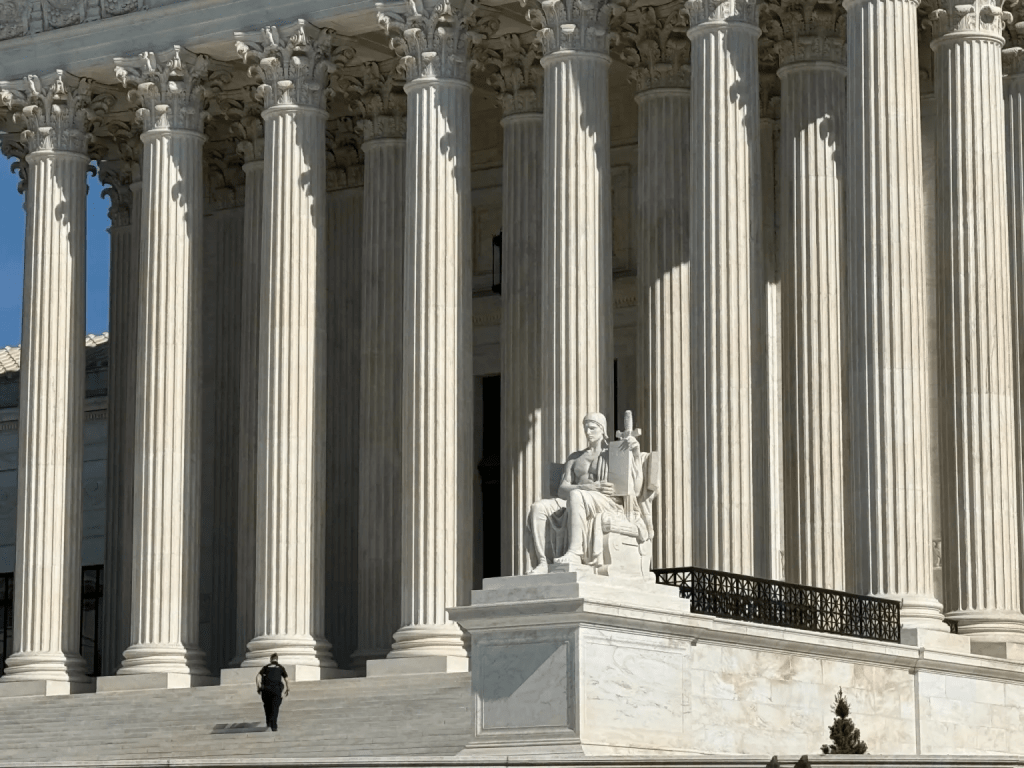
Trump Administration Refuses to Defend Campaign Finance Law at SCOTUS: A First Amendment Showdown Looms
In a dramatic development that could upend the landscape of political fundraising, the Trump administration has informed the U.S. Supreme Court that it will not defend a decades-old federal campaign finance law limiting how much money political parties can spend in coordination with candidates for office.
Instead, the Department of Justice—breaking with its traditional posture of defending federal statutes—agreed with a challenge spearheaded by Vice President J.D. Vance (then a Senator) and the National Republican Senatorial Committee (NRSC), arguing that the restriction violates core First Amendment rights.
This case could become one of the most consequential free speech and campaign finance cases the Court has heard in years. It comes at a time of growing skepticism on the Court toward government restrictions on political speech and coordination—especially in light of Citizens United v. FEC and other landmark rulings.
🚨 The Legal Battle: Coordinated Expenditures on the Line
At issue is a federal law that limits the amount of money political parties can spend “in coordination” with candidates running for office. Unlike independent expenditures—unlimited thanks to Citizens United—coordinated spending is closely scrutinized and regulated due to the potential for circumventing contribution caps.
The challengers, led by now–Vice President Vance and ex-Rep. Steve Chabot, claim these limits unconstitutionally burden the First Amendment rights of both political parties and candidates. They argue that the current legal regime forces donors toward super PACs, weakening party infrastructure and exacerbating political polarization.
The case originated in the 6th U.S. Circuit Court of Appeals, where Chief Judge Jeffrey Sutton acknowledged the challengers made “fair points” about the evolving campaign finance environment and judicial trends. However, the court concluded that it was bound by precedent, namely the Supreme Court’s 2001 ruling in FEC v. Colorado Republican Federal Campaign Committee, which upheld the very same coordinated spending restrictions.
🧑⚖️ The Trump Administration’s Position: A Rare DOJ Walk-Away
Despite the DOJ’s “longstanding policy of defending challenged federal statutes,” Solicitor General D. John Sauer made a notable exception here. In a brief filed with the Court, Sauer argued that the coordinated spending limits “violate core First Amendment rights” and that the 2001 precedent has been seriously weakened, if not outright overruled, by intervening case law and statutory changes.
The DOJ emphasized that only the Supreme Court has the authority to revisit or overturn Colorado Republican, but made clear it would not defend that precedent. This is a stark break from the norm and signals the administration’s full backing of Vice President Vance and the NRSC in their First Amendment claims.
📚 Legal Precedent Under Fire: What Has Changed Since 2001?
The 2001 ruling in Colorado Republican rested on the idea that coordinated party expenditures were functionally equivalent to large direct contributions and could be constitutionally limited to prevent corruption or its appearance.
But challengers argue that landscape has dramatically changed:
- Citizens United (2010) and McCutcheon v. FEC (2014) shifted the Court’s tone toward deregulation of political spending.
- Congress amended campaign finance laws in 2014, allowing unlimited coordinated expenditures for certain activities (e.g., election recounts), weakening the consistency of the law.
- The rise of super PACs and dark money has transformed campaign funding and diminished political parties’ influence.
The NRSC’s petition flatly calls for Colorado Republican to be overturned or at least severely limited.
🧑⚖️ Who Will Defend the Law Now? The Court May Appoint Outside Counsel
With the federal government refusing to defend the law, Solicitor General Sauer recommended that the Court appoint outside counsel to argue in favor of the 6th Circuit’s decision—essentially to ensure full adversarial presentation of the case.
If granted, this will mark the fourth time for the 2025–26 term that the Supreme Court has appointed outside lawyers to defend lower-court rulings abandoned by the federal government—a noticeable uptick in this rare judicial practice.
Recently, the Court appointed John Bash—a former Scalia clerk and seasoned appellate litigator—to argue in a separate case where the DOJ withdrew from defending a restitution statute under constitutional challenge.
⚖️ Looking Ahead: Supreme Court’s Conservative Tilt May Be Pivotal
If the Court agrees to hear the case, as expected, arguments will likely take place in fall 2025, with a decision in 2026. Given the Court’s current conservative majority and its growing hostility toward campaign finance restrictions, there is a real possibility that it may revisit or reverse Colorado Republican.
Such a decision would have sweeping implications:
- Political parties could spend freely in coordination with their candidates.
- The distinction between parties and PACs could blur, transforming the funding game.
- Campaign finance regulation would face a new wave of First Amendment-based dismantling.
#CampaignFinance #FirstAmendment #SCOTUS #PoliticalLaw #JDVance #SuperPACs #ElectionLaw #SupremeCourtWatch #LegalNews #TrumpAdministration #LawBlog #LawStudents #ConstitutionalLaw #FreeSpeech
 lawrota.com
Leave a comment