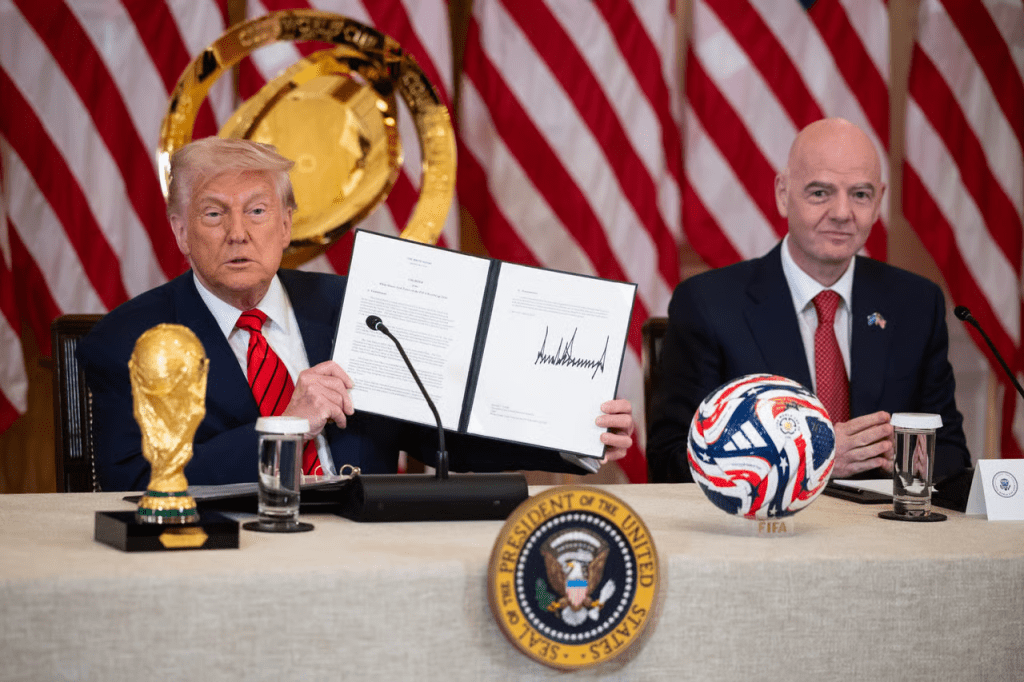
The global excitement surrounding the 2026 FIFA World Cup — set to take place across the United States, Mexico, and Canada — is being sharply undercut by a growing human rights controversy. In a pointed letter to FIFA President Gianni Infantino, Human Rights Watch (HRW) has expressed “grave concerns” about the implications of U.S. immigration and civil rights policies under the Trump administration, warning that they may violate FIFA’s own statutes and threaten the safety and inclusivity of the global tournament.
This legal and ethical dilemma brings into question FIFA’s commitment to non-discrimination, freedom of movement, and human rights protections, and raises issues of state accountability, private governance, and the responsibility of global organizations in upholding international norms.
🛂 The Legal Concern: Border Policies vs. Global Access
At the heart of the controversy are the U.S. government’s tough immigration and border enforcement measures, many of which were implemented or intensified during Donald Trump’s presidency. According to HRW, these policies could:
- Prevent players, fans, and journalists from certain nations from attending the event
- Result in arbitrary detentions, interrogations, or denials of entry
- Create visa application bottlenecks with prohibitively long wait times
- Allow for discriminatory enforcement, especially targeting people of color, Muslims, LGBTQ+ individuals, and political dissenters
- Choke off free speech and peaceful protest rights at and around matches
From a legal perspective, these concerns don’t just clash with the ethos of international sport — they may directly violate FIFA’s own human rights statutes.
🏛️ FIFA’s Human Rights Policy: A Binding Obligation
FIFA has, at least on paper, committed itself to robust human rights protections through its Human Rights Policy and the FIFA Statutes, which include pledges to:
- Promote non-discrimination and inclusivity in all events
- Uphold freedom of expression and peaceful assembly
- Apply leverage with host governments to enforce these commitments
HRW argues that if FIFA is serious about these commitments, it must do more than make symbolic gestures. In its letter, it pressed Infantino on three critical legal accountability questions:
- What steps is FIFA taking to ensure all fans and participants can safely enter the U.S.?
- What actions will be taken if individuals are subjected to discrimination or arbitrary detention?
- How is FIFA engaging with the U.S. government to align policies with international human rights standards?
This call to action isn’t just rhetorical. If FIFA fails to act, it risks facing legal scrutiny, public backlash, and reputational harm akin to the controversies that plagued its 2018 Russia and 2022 Qatar tournaments.
🧑⚖️ What Lawyers and Policymakers Should Watch
For legal professionals, this situation offers a case study in the intersection of international human rights law, sports governance, and domestic policy. Several key areas deserve scrutiny:
- International Covenant on Civil and Political Rights (ICCPR): As a signatory, the U.S. has obligations to protect freedom of movement, assembly, and non-discrimination — obligations that may be in tension with current immigration enforcement practices.
- Private International Law: FIFA’s internal rules may create enforceable obligations through its contracts with host nations, creating potential for legal redress if those rules are violated.
- Administrative and Immigration Law: The administration’s visa policies and entry restrictions could be challenged by rights groups if discriminatory patterns emerge in enforcement during the World Cup.
Lawyers advising FIFA, human rights organizations, or governments must navigate a complex terrain where soft law commitments (like FIFA’s statutes) can carry hard consequences — legally, politically, and commercially.
🧨 Political Risks and Diplomatic Fallout
FIFA is no stranger to controversial hosts, having previously partnered with autocratic regimes and turned a blind eye to abuses. However, the scrutiny around the 2026 World Cup may be more acute and legally actionable, given the scale of the tournament, U.S. civil society infrastructure, and the free press likely to amplify abuses.
Furthermore, there’s a risk of diplomatic embarrassment if athletes or fans from countries affected by U.S. bans (such as Iran, Syria, or Venezuela) are detained or denied entry. Such incidents could provoke international condemnation, trigger human rights litigation, or even prompt boycotts.
📢 The Trump Factor: An Ongoing Wild Card
Former President Trump’s involvement looms large. Though out of office during the 2026 event, Trump has been closely tied to the U.S. World Cup planning task force and remains a key figure in Republican immigration policy.
Infantino’s reported alignment with Trump’s border rhetoric behind closed doors has deepened concerns about FIFA’s independence and moral compass. HRW’s letter implicitly challenges Infantino’s credibility, highlighting the tension between private alliances and public commitments.
⚖️ Conclusion: Human Rights Can’t Be on the Bench
For law students, practicing attorneys, and policy advocates, the U.S. World Cup controversy is more than a sports story — it’s a textbook example of how international law, human rights, and domestic policy intersect in high-stakes, high-visibility contexts.
The 2026 FIFA World Cup has the potential to be a unifying global celebration. But unless FIFA and the U.S. government take real, transparent steps to guarantee access and rights for all participants — regardless of nationality, gender, sexual orientation, or political belief — this tournament may be remembered more for its exclusions than its goals.
#FIFA2026 #SportsLaw #HumanRightsWatch #TrumpPolicies #ImmigrationLaw #FIFAControversy #LegalAccountability #BorderPolicy #FIFAHumanRights #WorldCup2026
Source: https://www.politico.eu/article/donald-trump-fifa-world-cup-2026-gianni-infantino-us-canada-mexico/
 lawrota.com
Leave a comment