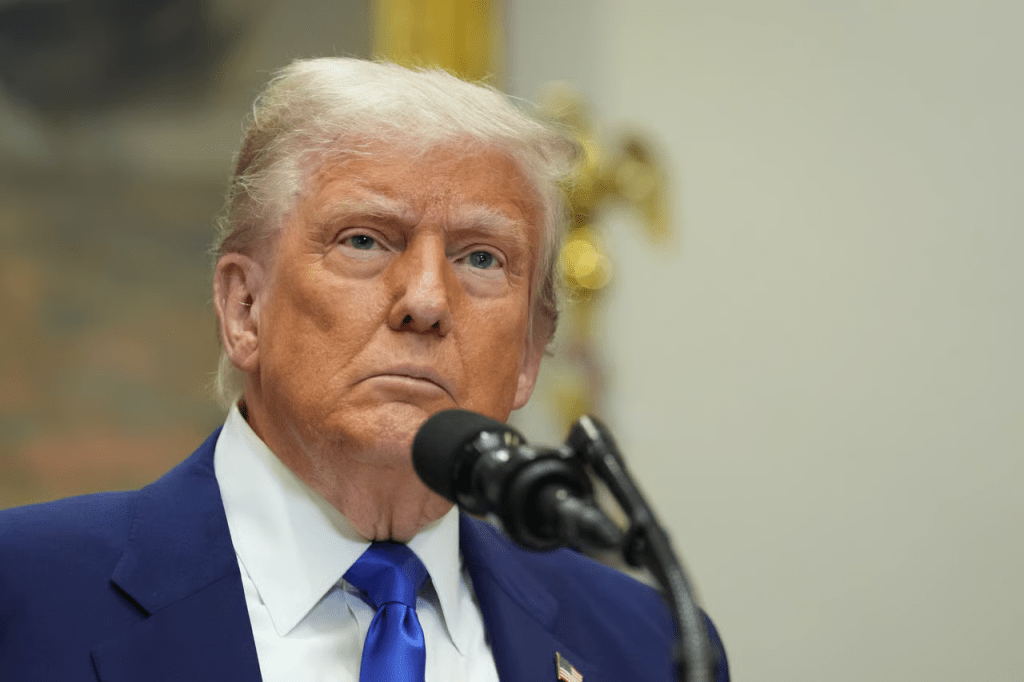
In a sobering critique of U.S. foreign policy, former NATO Secretary-General Anders Fogh Rasmussen has issued a scathing assessment of Donald Trump’s impact on global security, specifically highlighting the legal, strategic, and geopolitical risks now facing NATO and the broader Western alliance. Speaking ahead of the Copenhagen Democracy Summit, Rasmussen didn’t mince words: “Trump has significantly weakened the West,” and has “played his cards very badly” in the conflict between Ukraine and Russia.
While this may sound like political commentary, the implications for international law, treaty obligations, and national security frameworks are profound — and deserving of legal scrutiny.
Trump, NATO, and Article 5: Undermining Collective Defense
One of the most legally alarming aspects of Rasmussen’s critique is Trump’s suggestion that the U.S. might not honor NATO’s Article 5 — the core collective defense clause stating that an attack on one member is an attack on all. Trump has publicly mused that the U.S. may opt out of defending allies who fail to meet defense spending targets.
From a legal standpoint, while Article 5 isn’t automatically triggered — it allows for each member state to “take action as it deems necessary” — Trump’s comments risk shattering the legal credibility of NATO’s mutual defense obligations. If trust in Article 5 erodes, the alliance could face a de facto breach of treaty trust, leading smaller nations to seek alternative defense arrangements, undermining NATO’s binding effect under international treaty law (Vienna Convention on the Law of Treaties).
Legal Risks of Sanction Lifting and Territorial Concessions
Rasmussen also took issue with Trump’s willingness to hand over Ukrainian territory to Russia and lift sanctions without reciprocal concessions from Moscow. In international law, unilateral concession of territory — especially under threat or coercion — violates the principle of territorial integrity and sovereignty, protected under Article 2(4) of the UN Charter.
Further, lifting sanctions tied to violations of international law (like the annexation of Crimea or the invasion of Ukraine) without accountability or negotiated settlement contradicts norms under customary international law and the framework of UN Security Council Resolutions on conflict zones.
Trump’s actions, according to Rasmussen, signal to authoritarian regimes that international norms are negotiable based on political convenience — a dangerous precedent that hollows out the legal force behind sanctions as a diplomatic tool.
The Emerging Legal Void: If the U.S. Steps Down, Who Steps In?
Rasmussen’s most striking statement may be his suggestion that the U.S. has effectively “retired” from being the leader of the free world. In that vacuum, he proposes a new coalition: a “D7” composed of democratic nations such as the EU, U.K., Canada, Australia, Japan, South Korea, and New Zealand — designed to resist coercion from both China and the United States.
This isn’t just a political strategy — it’s a reconfiguration of the legal architecture of collective security, with potential new multilateral treaties, military accords, and economic partnerships. Such a group would almost certainly require new legal frameworks, possibly modeled after NATO’s original Washington Treaty or even hybrid constructs blending security and trade provisions.
The legal challenge? Creating binding agreements that are not subject to unilateral withdrawals or domestic political upheaval — as seen in the U.S. under Trump.
Strategic Autonomy and Legal Rebalancing in Europe
Rasmussen also stressed the urgent need for European defense independence. His think tank, the Alliance for Democracies, recommends doubling NATO’s defense spending target to 4% of GDP and mobilizing €400 billion in public and private funds to rebuild Europe’s defense industrial base.
Legally, this will necessitate rapid defense procurement reforms, the relaxation of EU state aid rules, and perhaps even special legal exemptions from fiscal discipline treaties like the Maastricht Criteria. The shift would reposition Europe not just as a subordinate ally, but as a co-equal security guarantor — a strategic and legal evolution not seen since the Cold War.
Zelenskyy, Ceasefires, and the Legal Morass of “Peace Talks”
Trump has also pressed Ukraine to accept a ceasefire deal — a proposal that Rasmussen deems hollow. “The Russians are playing games,” he said, predicting no end to the conflict in sight. From a legal standpoint, any ceasefire must be governed by international humanitarian law (Geneva Conventions) and must ensure protections for civilians, access to aid, and non-recognition of illegal territorial gains.
Trump’s framing of “peace at any cost” ignores these constraints and risks legitimizing a war of aggression, which violates Article 51 of the UN Charter and echoes the legal debates around appeasement in the 1930s.
Conclusion: A Legal Inflection Point for Global Democracy
Anders Fogh Rasmussen’s warning is more than geopolitical commentary — it’s a call for legal scholars, international lawyers, and policy practitioners to rethink the foundations of global democratic cooperation. If the U.S. continues down the path of transactional diplomacy, withdrawing from legal and moral leadership, the West may need to build new frameworks that prioritize binding, enforceable norms and exclude any one nation’s volatility from destabilizing collective peace.
As global threats mount, the question is no longer whether Western alliances can survive — but whether they can evolve with legally resilient structures strong enough to endure populism, autocracy, and strategic abandonment.
#TrumpNATO #InternationalLaw #CollectiveSecurity #UkraineCrisis #NATOArticle5 #LegalEthics #WesternAlliance #GlobalDemocracy #AndersRasmussen #D7Summit
 lawrota.com
Leave a comment