The Legal Battle Over Venezuelan TPS Status: A Constitutional Test of Executive Discretion
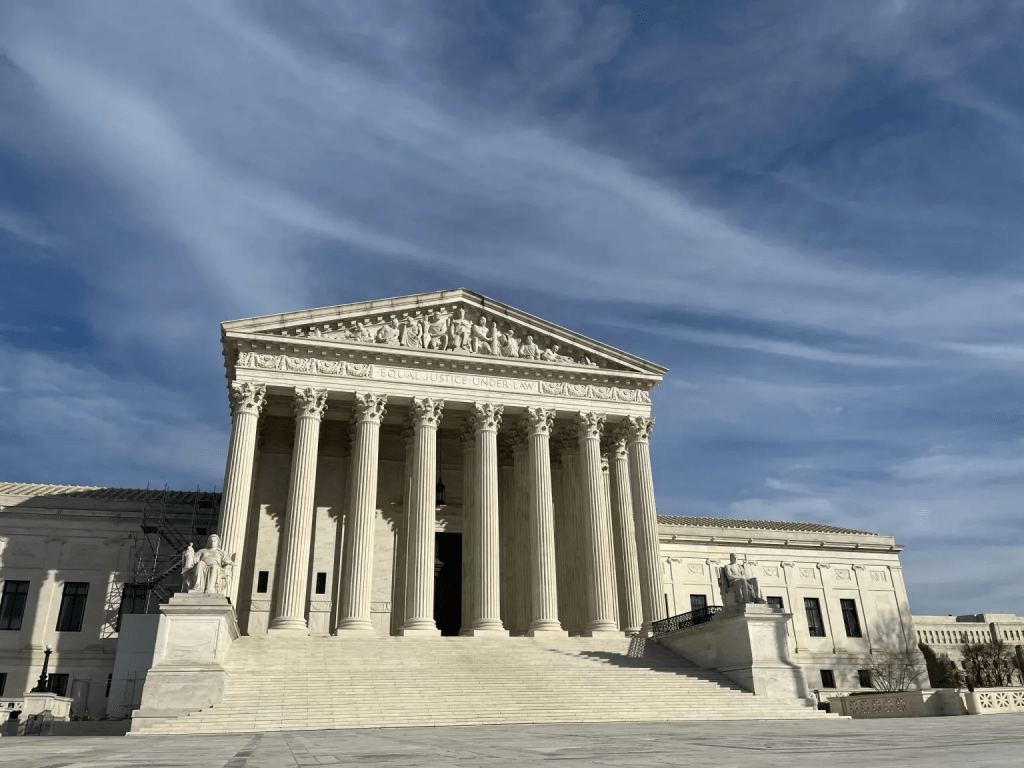
A legal showdown is unfolding at the U.S. Supreme Court, centered on whether the Department of Homeland Security (DHS) can rescind Temporary Protected Status (TPS) for nearly 350,000 Venezuelan nationals currently living and working in the United States. This high-stakes dispute touches on fundamental constitutional questions about executive power, immigrant rights, and the integrity of humanitarian protections under U.S. immigration law.
Temporary Protected Status: A Lifeline with Legal Limits
TPS is a humanitarian program created under the Immigration Act of 1990, designed to offer temporary refuge to nationals of countries experiencing extraordinary crises—such as natural disasters, armed conflict, or systemic instability. Under TPS, eligible individuals are granted temporary protection from deportation and work authorization.
Venezuela was granted TPS in 2021 by then-DHS Secretary Alejandro Mayorkas, citing political and economic turmoil. The designation was renewed subsequently and became a critical safeguard for hundreds of thousands of Venezuelans fleeing the country’s humanitarian collapse.
But in February 2025, newly appointed DHS Secretary Kristi Noem abruptly ended the TPS designation for Venezuelans and terminated ongoing extensions. The move triggered a wave of legal and political backlash, as advocates and immigration experts questioned both the legality and the motive behind such a drastic reversal.
⚖️ Federal Court Ruling Blocks Termination
Shortly after Noem’s decision, a group of TPS recipients challenged the policy in federal court in San Francisco. Represented by Ahilan Arulanantham, a UCLA law professor and former ACLU lawyer, the plaintiffs argued that the termination was both unlawful and politically motivated.
Senior U.S. District Judge Edward Chen issued a powerful ruling in March 2025, blocking DHS from implementing the termination order. Calling the move “unprecedented,” Judge Chen suggested that the government’s action was based more on anti-immigrant sentiment than factual assessments. The court underscored the need for judicial oversight when executive agencies appear to act arbitrarily or with discriminatory intent.
🔁 Government Pushes Supreme Court to Intervene
Unwilling to accept the ruling, Solicitor General D. John Sauer filed an emergency application with the Supreme Court to lift Judge Chen’s order. Sauer contended that decisions related to TPS involve sensitive and discretionary foreign policy judgments that courts should avoid second-guessing. He warned that allowing lower court interference could undermine the Executive Branch’s ability to respond flexibly to evolving global conditions.
The administration emphasized that the TPS statute gives DHS broad authority to grant, extend, or terminate protected status based on national interest and humanitarian need. According to the government, judicial involvement in this process risks politicizing a mechanism intended to be nimble and adaptable.
🛡️ Plaintiffs Defend the Status Quo
The Venezuelan plaintiffs fired back in a filing on May 9, arguing that lifting the injunction would throw 350,000 individuals into a state of legal and humanitarian crisis. They warned of widespread job losses, abrupt deportations, and re-traumatization of individuals who fled an unstable and unsafe country.
Crucially, the plaintiffs also asserted that they are likely to win on the merits. They cited legal precedent suggesting that while the DHS secretary has broad discretion in initially designating a country for TPS, she has significantly less freedom to revoke that designation once granted. Specifically, they argue that federal law outlines a structured review process with clear criteria, and that Noem’s sudden reversal lacked procedural justification and factual basis.
They also noted that the government delayed seeking Supreme Court review for nearly two weeks after the 9th Circuit declined to pause the district court’s ruling, weakening the argument for “emergency” relief.
🔍 The Larger Context
This case arrives amid a broader battle over immigration authority in the courts. On the same day, the Supreme Court was also asked to weigh in on whether the DHS can revoke humanitarian parole for 500,000 migrants from Cuba, Haiti, Nicaragua, and Venezuela. Together, these cases represent a full-frontal legal challenge to the Biden administration’s use of executive discretion in managing immigration policy—and an aggressive push by the Trump-aligned legal apparatus to reshape the boundaries of that discretion.
🧠 Legal and Political Implications
If the Supreme Court sides with the government, it could set a precedent allowing future administrations to rapidly undo TPS designations without court oversight, even if done arbitrarily. For the legal community, it raises crucial questions:
- Does TPS confer more than just temporary protection—does it create procedural rights?
- Should courts defer completely to the Executive Branch on foreign-policy-laden immigration decisions?
- Can a humanitarian safeguard become a political pawn?
As the case awaits oral arguments in the Ninth Circuit in July 2025, the Supreme Court’s immediate decision on the emergency relief request will set the tone for the broader legal battle ahead.
#TPS #ImmigrationLaw #SupremeCourt #VenezuelanImmigrants #DHS #DeportationLaw #LegalRights #HumanitarianRelief #ExecutivePower #SCOTUSWatch
Source: https://www.scotusblog.com/2025/05/venezuelan-tps-recipients-tell-justices-to-let-status-stand/
 lawrota.com
Leave a comment