What lawyers need to know about the immigration showdown over Temporary Protected Status and the limits of judicial review.
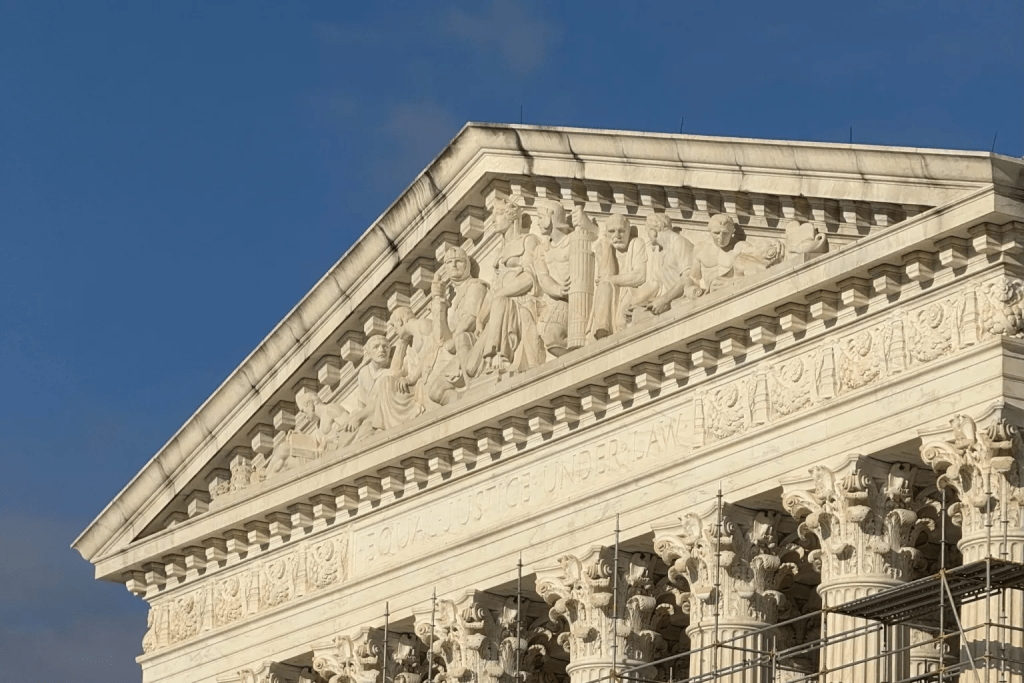
In yet another high-stakes immigration dispute, the Trump administration is turning to the Supreme Court to challenge a lower court decision that temporarily blocks the termination of Temporary Protected Status (TPS) for Venezuelan nationals. This case, though quietly filed, could significantly shape the relationship between the executive branch’s immigration authority and the judiciary’s role in reviewing humanitarian protections.
The administration’s petition to the Court underscores the ongoing legal tension surrounding executive discretion in foreign policy, the scope of judicial review under immigration law, and the administrative procedures governing federal agencies.
⚖️ The Heart of the Legal Dispute: TPS for Venezuelans
The Temporary Protected Status (TPS) program, established under federal law, allows the Secretary of Homeland Security to grant temporary permission to remain and work in the U.S. to nationals of countries suffering from armed conflict, natural disasters, or other “extraordinary and temporary conditions.”
In 2021, under President Biden, then-DHS Secretary Alejandro Mayorkas extended TPS to Venezuelans fleeing political unrest, humanitarian crisis, and economic collapse. This move allowed hundreds of thousands of Venezuelan nationals to remain lawfully in the United States.
However, in a dramatic policy reversal, Kristi Noem, Trump’s Secretary of Homeland Security, announced on Feb. 1, 2025, her intent to terminate Venezuela’s TPS designation. Within weeks, impacted Venezuelan migrants and an advocacy organization challenged the move in federal court in San Francisco.
On March 31, Senior U.S. District Judge Edward Chen sided with the plaintiffs and barred DHS from implementing the TPS termination. He argued that Noem’s attempt to reverse course on TPS was not only “unprecedented” but may have been based on discriminatory stereotypes about Venezuelan migrants.
⚖️ Legal Arguments at the Supreme Court: A Clash of Authority
The government, represented by Solicitor General D. John Sauer, quickly asked the Supreme Court to lift Chen’s injunction. In his emergency request, Sauer made the following key arguments:
🔹 1. Executive Power and Foreign Policy
Sauer insists that the TPS statute grants broad and discretionary powers to the executive branch. Termination decisions, he argues, involve complex foreign policy and national interest calculations that are not suitable for judicial oversight.
He criticizes Judge Chen for substituting his own evaluation of international diplomacy and security consequences for that of the executive branch, asserting that this “wrests control of the nation’s immigration policy away from the Executive Branch.”
🔹 2. Statutory Bar on Judicial Review
The TPS law explicitly states that courts may not review the DHS Secretary’s decisions regarding TPS designations. Despite this clear limitation, Chen allowed the case to proceed under the Administrative Procedure Act (APA), which governs federal agency conduct.
Sauer argues that this is an inappropriate workaround that defies congressional intent and undermines the finality of executive immigration decisions.
🔹 3. Unprecedented Judicial Overreach
Sauer contends that the preliminary injunction “overrides DHS determinations indefinitely,” and forces the government to allow “hundreds of thousands” of Venezuelans to stay—despite DHS’s conclusion that such an action is against U.S. interests.
This kind of sweeping court order, he argues, violates the separation of powers by putting courts in charge of immigration and national security decisions.
📚 Why This Case Matters to Legal Professionals
This case spotlights urgent questions for constitutional and immigration law:
- Can courts override TPS terminations on the grounds of alleged procedural irregularities?
- Is the APA a valid avenue for challenging executive immigration decisions that are otherwise protected from judicial review?
- How much discretion should DHS Secretaries have when interpreting what’s “in the national interest”?
The outcome could significantly narrow or expand the ability of federal courts to scrutinize humanitarian decisions made by the executive branch.
For immigration attorneys, administrative law practitioners, and constitutional scholars, this is more than a TPS case—it’s a bellwether on how far judicial review can reach into politically charged, discretion-heavy immigration actions.
#ImmigrationLaw #TPS #SCOTUS #VenezuelanMigrants #ExecutivePower #AdministrativeLaw #LegalNews #LawStudents #ImmigrationPolicy #ConstitutionalLaw
 lawrota.com
Leave a comment