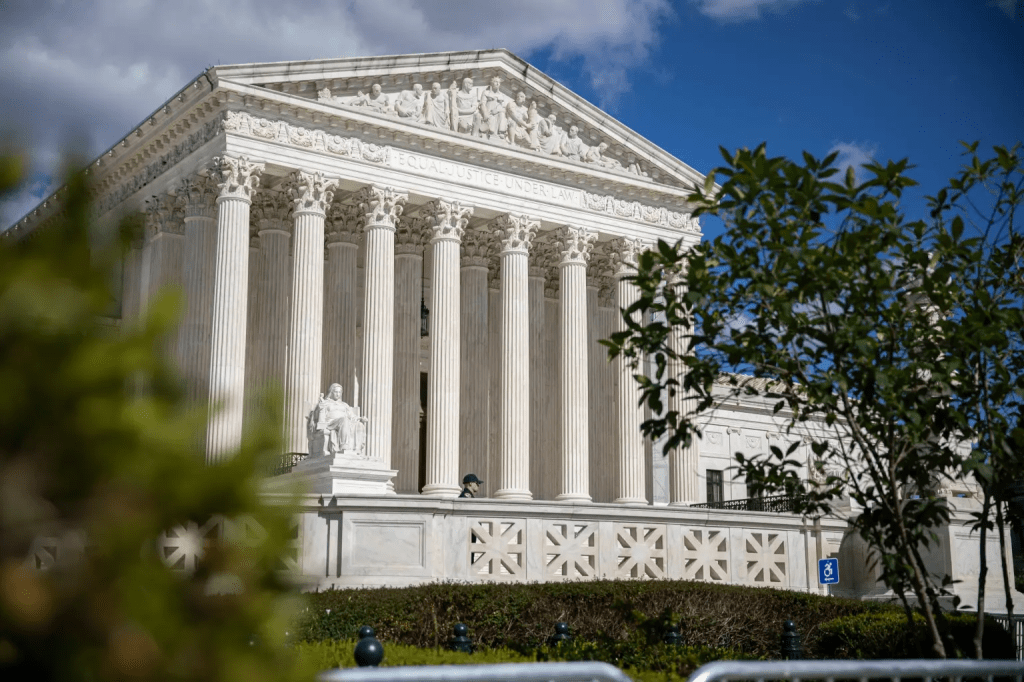
Supreme Court Confronts Double Standards in Disability Discrimination for Students
In a case that could redefine how schools handle disability discrimination, the U.S. Supreme Court recently heard oral arguments in A.J.T. v. Osseo Area Schools. While the legal question centers on whether students with disabilities face an unfairly higher bar when alleging discrimination, it was the fiery courtroom clash between a justice and a high-profile advocate that seized national attention.
The heart of the case lies in whether there should be a heightened standard for proving disability discrimination in educational settings compared to other public or private arenas. Currently, some lower courts have applied a stricter evidentiary burden on students who bring discrimination claims under Section 504 of the Rehabilitation Act and the Americans with Disabilities Act (ADA). A.J.T., a student with a disability, challenged that inconsistency—arguing that such dual standards undermine federal disability protections and perpetuate inequality.
Representing A.J.T., attorney Roman Martinez told the justices that the issue was, for all practical purposes, moot. Why? Because the Osseo school district—the opposing party—had seemingly shifted its position, now aligning with the view that a single standard should apply across the board. Martinez urged the Court to validate this “unitary standard” and remand the case so the lower court could apply it appropriately.
The justices appeared open to this approach, with Justice Brett Kavanaugh clarifying whether remand would still allow the lower courts discretion in choosing the correct standard. Throughout Martinez’s argument, the justices focused less on defending any dual standard and more on ensuring clarity in the application of the law. They also questioned the semantic differences between the student’s argument and that of the U.S. government, which filed an amicus brief supporting A.J.T.
A Legal Debate Ignites a Personal Clash
However, what was shaping up to be a relatively smooth session turned confrontational when Lisa Blatt, arguing for the school district, accused both Martinez and Nicole Reaves (appearing for the U.S. Solicitor General’s office) of “lying” about her prior position in court filings.
This sparked a rare and intense rebuke from Justice Neil Gorsuch. He immediately interrupted Blatt:
“You believe that Mr. Martinez and the Solicitor General are lying? Is that your accusation?”
Blatt, undeterred, confirmed: “Yes, absolutely.” Gorsuch’s tone sharpened:
“I think you should be more careful with your words, Ms. Blatt.”
Though the argument continued, Gorsuch circled back minutes later, saying he remained “troubled” by her assertion and urged her to reconsider. He explained the difference between being incorrect and being dishonest—highlighting that accusations of lying carry severe implications, particularly in Supreme Court proceedings.
What followed was an unusually tense moment of legal theater. Gorsuch read aloud extensive excerpts from Blatt’s own filings to demonstrate her prior implication of a dual-standard defense, which directly supported what the opposing counsel had claimed. After this painstaking dissection, Gorsuch pressed her again:
“Then would you withdraw your accusation?”
Blatt eventually relented: “I’ll withdraw it.”
“Thank you. That’s it,” Gorsuch concluded.
A Broader Legal Concern: Disparate Treatment in Disability Law
Beyond the courtroom drama, the underlying legal stakes are profound. A decision in favor of A.J.T. would align educational disability claims with other areas of civil rights law, ensuring that students with disabilities are not required to clear a higher legal threshold to seek justice.
Justices Amy Coney Barrett and Ketanji Brown Jackson appeared skeptical of the school district’s original argument. Barrett referred to it as “a pretty big sea change” in established law and noted the absence of precedent in other circuits. Jackson seemed stunned by the suggestion that federal disability law does not mandate accommodation in schools.
Their comments underscore a general reluctance from the bench to adopt the school district’s formerly implied position, especially as it appeared to materialize only in late-stage filings. This raised concerns of sandbagging—a strategic shift in legal arguments that blindsides both the opposing side and the Court itself.
Why This Case Matters
This case could mark a significant turning point in how courts treat disability discrimination claims in education. If the justices endorse a unitary standard, it will solidify the principle that equal access under the ADA and Section 504 should not depend on where discrimination occurs—be it in a classroom or anywhere else.
Conversely, if the Court punts on resolving the standard due to the procedural ambiguity caused by shifting arguments, it may leave lower courts with continued discretion to apply different—and potentially unjust—standards for children versus adults.
In any case, A.J.T. v. Osseo Area Schools has already sparked critical dialogue—not only about disability rights but also about civility, accountability, and professional ethics in the nation’s highest court.
#EducationLaw #DisabilityRights #ADA #Section504 #LegalEthics #SpecialEducationLaw #LawStudents #CivilRights #LegalNews #FederalLaw #SupremeCourt2025
 lawrota.com
Leave a comment