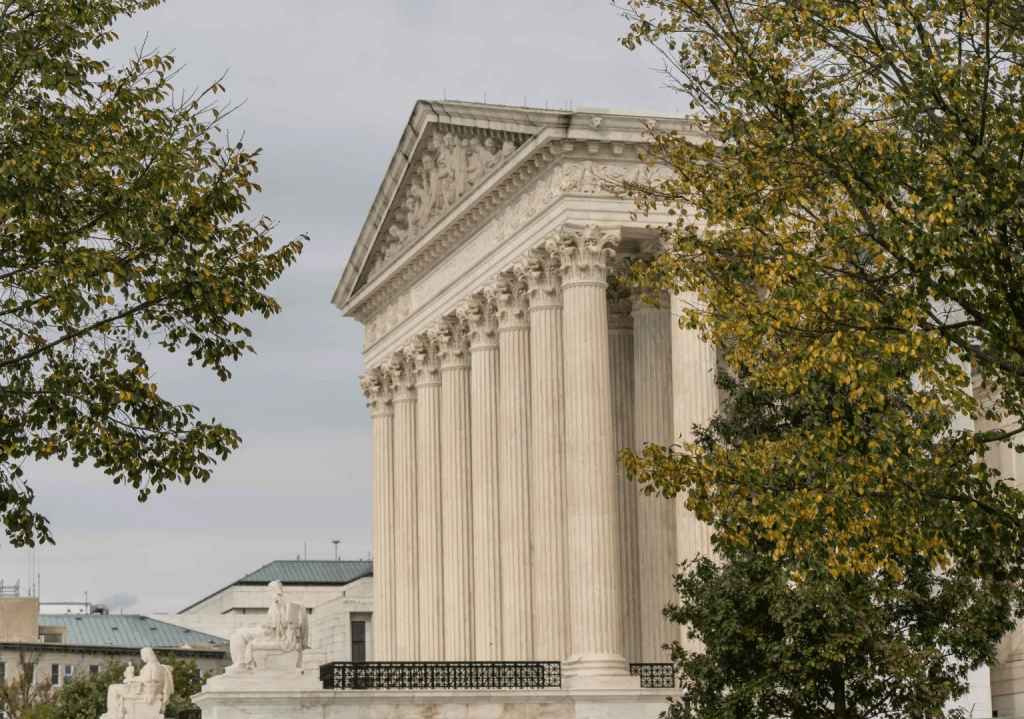
The Fight for the First Religious Charter School: A Pivotal Constitutional Crossroads
The U.S. Supreme Court recently heard arguments in a contentious case that could dramatically reshape the landscape of public education and religious freedom in America. At the heart of the dispute is St. Isidore of Seville Catholic Virtual School, a proposed religious charter school in Oklahoma that may become the nation’s first publicly funded religious charter institution—if the Court rules in its favor.
With Justice Amy Coney Barrett recused, the outcome may hinge on Chief Justice John Roberts, who remained notably neutral throughout oral arguments, directing sharp questions at both sides. His decision could tilt the Court’s ideological balance and set a transformative precedent.
🏫 Background: A Church-State Collision in Oklahoma
In 2022, Oklahoma’s charter school board approved a proposal from the Archdiocese of Oklahoma City and the Diocese of Tulsa to create St. Isidore, a virtual Catholic charter school. The state’s charter school statute explicitly requires such schools to be secular—non-religious in their curriculum, admissions, and operations. Nonetheless, the charter board entered a contract that allowed St. Isidore to exercise its religious tenets freely.
Oklahoma’s Attorney General Gentner Drummond challenged the approval in the state supreme court, which sided with him. The court declared that charter schools are public institutions and must abide by the same secular standards as traditional public schools. Drummond’s position was clear: allowing a religious charter school funded by taxpayer dollars violates state and federal constitutional principles separating church and state.
🧑⚖️ Supreme Court Showdown: A Question of State Actor vs. Private Actor
The key constitutional question before the Court is whether St. Isidore, though created by religious entities, functions as a state actor or private actor. If it is a state actor, it cannot exercise religious doctrines while being funded by public money.
Representing the school board, attorney James Campbell argued that the state’s charter school program relies on private actors to broaden educational options. He cited three recent Supreme Court decisions—Trinity Lutheran v. Comer, Espinoza v. Montana Dept. of Revenue, and Carson v. Makin—which barred states from excluding religious organizations from generally available public benefits.
Chief Justice Roberts and Justices Elena Kagan and Ketanji Brown Jackson, however, emphasized the structural difference in this case: St. Isidore is not a private school seeking access to public benefits—it is a religious institution seeking to become a public school itself.
Kagan noted that charter schools operate under state mandates, are free to attend, and are obligated to meet state academic standards. “These are state-run institutions,” she concluded, clearly skeptical of equating this case to previous free exercise decisions.
Jackson added that St. Isidore is not being denied a benefit because of its religion—it’s being denied the right to create a religious public school, a privilege no one else has either.
✝️ Free Exercise or Theocratic Overreach?
Gregory Garre, representing the Attorney General, stressed that charter schools have all the markers of public institutions. Their operations are state-created, heavily regulated, and accountable under public education laws. Allowing a religious charter school, he argued, would dismantle the distinction between church and state in education and disrupt existing laws that ensure public schools remain secular.
On the other hand, Justices Samuel Alito and Neil Gorsuch showed concern that religious groups were being unfairly excluded. Alito even invoked Masterpiece Cakeshop v. Colorado Civil Rights Commission, warning that opposing St. Isidore on religious grounds may reflect bias, especially if the same logic would be used to deny charter applications from minority religions.
Justice Brett Kavanaugh echoed the concern that if St. Isidore is denied simply because it’s religious, then faith-based service organizations like Catholic Charities or Catholic Social Services might also face barriers to receiving public support, raising broader First Amendment concerns.
🧩 Policy Implications and What’s at Stake
Beyond legal theory, the practical effects of the Court’s decision could be far-reaching. If the justices side with the school and the board:
- Federal and State Charter Laws Could Crumble: Many state laws mandate non-sectarian operations for public schools. A ruling for St. Isidore could render these laws unconstitutional, forcing legislatures to rewrite them from scratch.
- Blurring the Public-Private Divide: The precedent could allow religious organizations to run public institutions without relinquishing their doctrinal beliefs, raising questions about hiring, curriculum, and admissions.
- Disability Law in Jeopardy: As charter schools are bound by federal disability laws like IDEA, the Court’s ruling could jeopardize those protections if charter schools are no longer considered public entities.
🔮 What Comes Next?
The case is finely poised. Four conservative justices—Thomas, Alito, Gorsuch, and Kavanaugh—seem likely to back the school. The liberals—Sotomayor, Kagan, and Jackson—appear opposed. The deciding vote will likely come from Chief Justice Roberts, who has historically attempted to strike a balance between religious liberty and public interests.
Should the Court side with St. Isidore, the ruling would mark a monumental shift in the interpretation of the Establishment and Free Exercise Clauses—paving the way for religious charter schools nationwide. If the Court upholds Oklahoma’s rejection, it will reaffirm a hard boundary between public education and religious instruction.
Either outcome promises to leave an indelible impact on how the nation defines the line between church and state.
#ReligiousFreedom #CharterSchools #SupremeCourt #EducationLaw #FirstAmendment #PublicEducation #ChurchAndState #LegalDebate #LawStudents #SCOTUSWatch
 lawrota.com
Leave a comment