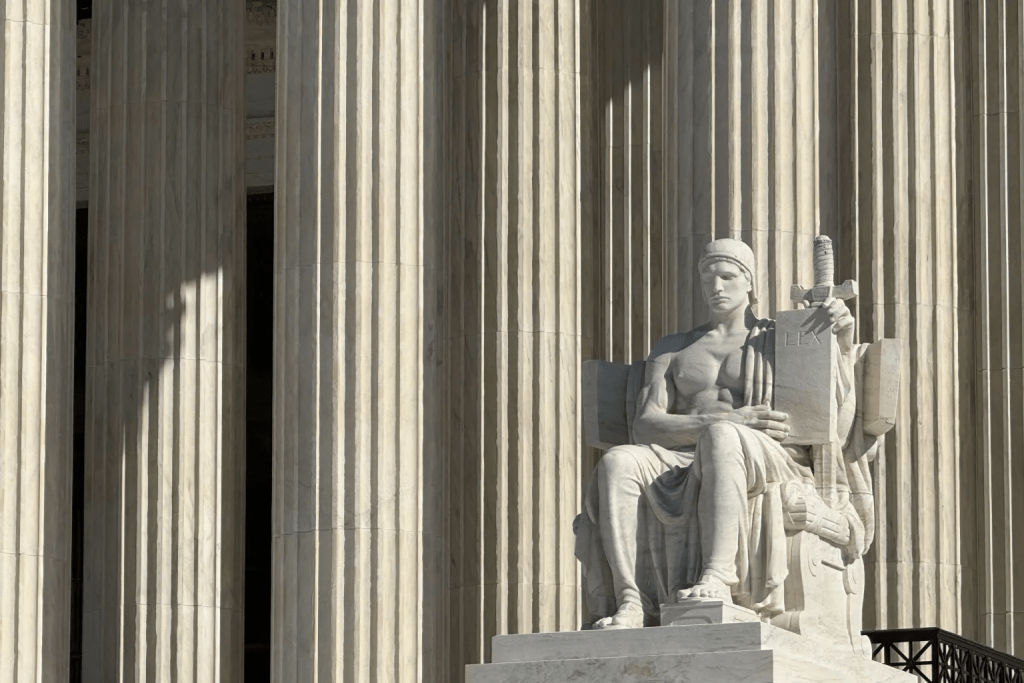
Legal Showdown at the Crossroads of Faith and Education: A Deep Dive into the Supreme Court’s LGBTQ Curriculum Case
The Supreme Court is poised to rule on a highly contentious issue that pits parental religious rights against inclusive educational policies. The case centers on a group of religiously diverse parents in Montgomery County, Maryland, who argue that their First Amendment rights are being violated because they are no longer allowed to opt their children out of public school lessons involving LGBTQ+ themes.
At the Heart of the Dispute: In 2022, Montgomery County Public Schools (MCPS) added a series of LGBTQ-themed children’s books to their elementary language arts curriculum. Titles like Pride Puppy and a story about a girl attending her uncle’s same-sex wedding aim to foster inclusivity and awareness of diverse family structures. But by 2023, the school board eliminated its opt-out policy, leaving parents unable to shield their children from instruction that conflicts with their deeply held religious beliefs.
The parents involved in the case represent multiple faiths, including Islam, Roman Catholicism, and Ukrainian Orthodoxy. They assert that the inclusion of these storybooks in classroom instruction without the option to opt out imposes on their religious freedoms. They claim the policy forces them to forfeit their right to teach their children about gender and sexuality through the lens of their faith.
First Amendment in Focus: The legal argument hinges on the Free Exercise Clause of the First Amendment. During over two hours of oral arguments, several justices signaled alignment with the parents’ perspective. Justice Brett Kavanaugh highlighted that the parents are not trying to change the curriculum but simply wish to remove their children from lessons that conflict with their faith. Justice Samuel Alito underscored that current policy could allow schools to promote moral messages “highly objectionable” to certain families—without offering a respectful alternative.
Justice Amy Coney Barrett distinguished between mere exposure and indoctrination, noting that presenting controversial material as the “correct worldview” crosses a constitutional line. Similarly, Justice Clarence Thomas probed the practical application of the books—are they passively available or actively used as part of required lessons?
Eric Baxter, representing the parents, clarified that teachers are expected to use these books regularly, with suggested use up to five times a year. His argument emphasized that this isn’t passive exposure but structured, planned instruction.
The Liberal Justices’ Counterpoint: Not all justices were convinced. Justice Sonia Sotomayor, along with Justices Elena Kagan and Ketanji Brown Jackson, voiced concerns about the broader implications of allowing parental opt-outs. Would this open the floodgates for religious objections to other educational content—like books on women’s rights, divorce, or interfaith marriage?
Justice Jackson raised a hypothetical: could parents demand that their children not be in a classroom with a gay teacher displaying family photos? The concern: how far does parental control extend, and what happens to inclusive learning environments if schools are forced to accommodate every objection?
Justice Kagan explored the potential burden on school systems, suggesting that creating opt-outs could make schools vulnerable to excessive administrative challenges and legal conflicts. In contrast, Baxter noted that opt-outs already exist in numerous other contexts—like sex education—and that fears of chaos are largely unfounded.
Feasibility vs. Freedom: The school board, represented by Alan Schoenfeld, argued that opt-outs were logistically unfeasible. With dozens of students opting out, it became difficult to supervise and offer alternative instruction. But that argument did not sit well with some justices. Chief Justice John Roberts noted that a five-year-old might not understand the abstract idea that they can disagree with their teacher, making “non-coercion” a less convincing defense.
Justice Kavanaugh pressed further, stating that if other school boards around the country manage opt-outs, Montgomery County should be able to do the same. He emphasized the court’s role in finding “win-win” solutions where both religious liberty and educational goals are preserved.
The Likely Outcome: By the end of the session, the majority of the court seemed inclined to rule in favor of the parents. The consensus was not about dismantling inclusive education but rather about respecting the rights of families to guide their children’s exposure to sensitive topics.
The ruling could have broad implications for school policies across the country. If the court sides with the parents, public schools may be required to accommodate religious objections more frequently, not just for LGBTQ+ content but potentially for any curriculum perceived to clash with faith-based beliefs.
The justices face the delicate task of balancing parental rights, educational integrity, and constitutional protections. While a final ruling is still pending, Tuesday’s arguments strongly suggest a shift toward bolstering religious freedom in educational settings.
#SupremeCourt #LGBTQCurriculum #ParentalRights #ReligiousFreedom #FirstAmendment #EducationLaw #LegalDebate #SCOTUS2025 #OptOutRights #FaithAndEducation
 lawrota.com
Leave a comment