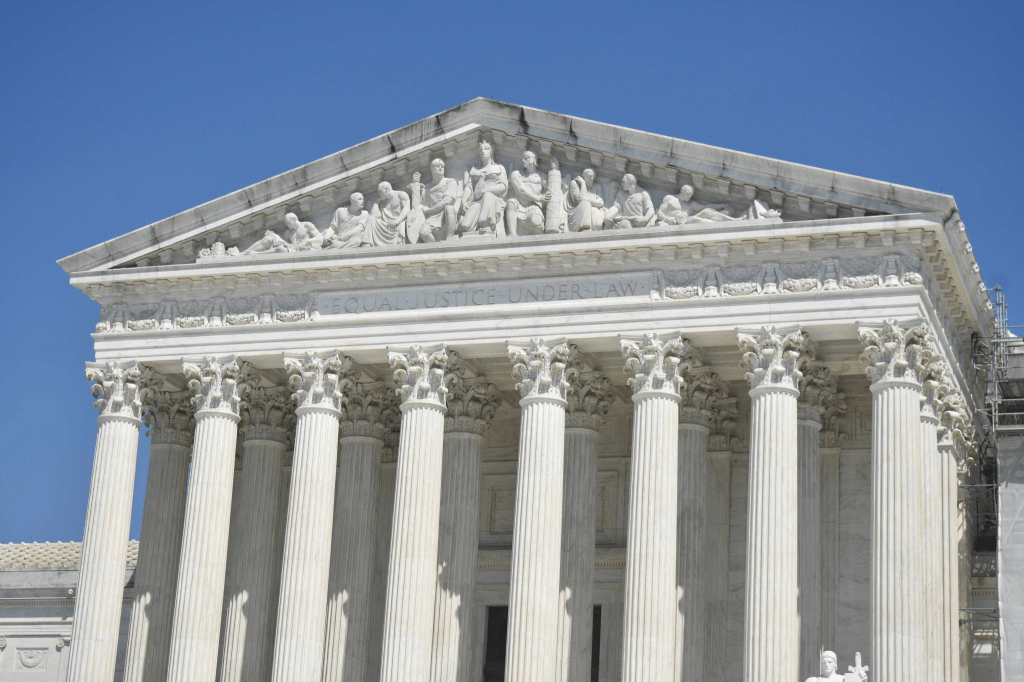
In what is shaping up to be a pivotal test of religious liberty and educational policy, the U.S. Supreme Court has agreed to hear Mahmoud v. Taylor—a case that will address whether public schools must allow religious parents to opt their children out of classroom instruction that includes LGBTQ+ themes.
The outcome may redefine the scope of the Free Exercise Clause of the First Amendment in the context of public school curricula, with ripple effects across the nation’s education systems.
⚖️ The Case: Mahmoud v. Taylor
At the center of the legal firestorm is a group of Muslim, Catholic, and Ukrainian Orthodox parents in Montgomery County, Maryland, who argue that the inclusion of LGBTQ+-themed books in their children’s English Language Arts (ELA) curriculum violates their religious freedoms.
Montgomery County, one of the most religiously diverse and populous school districts in the U.S., introduced books in 2022 that reflect diverse family structures and sexual orientations, including:
- Pride Puppy, which tells the story of a lost dog during a Pride parade.
- A picture book featuring a girl attending her uncle’s same-sex wedding.
By 2023, the district decided to eliminate prior opt-out provisions, effectively requiring all students to engage with this material, regardless of religious objections.
🧑⚖️ What the Parents Are Arguing
The parents argue that the policy substantially burdens their right to guide their children’s moral and religious development, pointing to landmark cases:
- Wisconsin v. Yoder (1972): where Amish parents were allowed to withdraw their children from school after the 8th grade on religious grounds.
- Church of the Lukumi Babalu Aye v. City of Hialeah (1993): which held that laws targeting specific religious practices are unconstitutional if they are not neutral or generally applicable.
According to the parents, the Montgomery County policy fails both standards. It is:
- Not neutral, since it allegedly treats religious objectors differently.
- Not generally applicable, because the district historically allowed opt-outs for sex ed and family life instruction but now makes an exception for LGBTQ+ content.
They further claim that some school board members demonstrated religious bias, equating concerned parents with “white supremacists” and “xenophobes”—a move they say reveals explicit hostility and undermines the policy’s neutrality.
🏛️ Lower Courts Push Back
So far, lower federal courts have sided with the school district. The U.S. Court of Appeals for the Fourth Circuit declined the parents’ request for a preliminary injunction that would allow opt-outs during litigation. The court stated that the parents failed to show the kind of direct coercion or compulsion necessary to trigger First Amendment protections.
According to the 4th Circuit:
- Exposure to diverse viewpoints alone does not equal coercion.
- No child was forced to affirm a conflicting belief, nor was any family penalized for their religious stance.
🧵 Where the School Board Stands
The Montgomery County Board of Education insists that:
- The policy is both neutral and generally applicable.
- Parents voluntarily send their children to public schools and, by doing so, accept a curriculum designed to reflect a pluralistic and inclusive society.
- The goal is not to change religious beliefs but to expose students to the diversity they will inevitably encounter.
The board also warns that granting opt-outs in this context could open Pandora’s box—allowing parents to cherry-pick curricula based on subjective or sectarian beliefs, which would threaten the integrity and consistency of public education nationwide.
📝 Religious Liberty vs. Public Education: The Stakes
This case could reshape how courts balance:
- Religious freedoms of parents
- Inclusivity and diversity mandates in public education
- The limits of state authority over curriculum decisions
If SCOTUS sides with the parents, schools across the country may be required to create opt-out mechanisms for religious families objecting to specific content—even in non-religious classes like language arts.
Conversely, a ruling in favor of the school board could solidify the state’s role in crafting inclusive curricula, regardless of parental objections rooted in faith.
#MahmoudvTaylor #ReligiousFreedom #LGBTQBooksInSchools #FirstAmendmentRights #ParentalRights #SCOTUSWatch #LegalEducation #EducationLaw #FreedomOfReligion #InclusiveCurriculum #LawStudents #LegalDebate #PublicSchoolPolicy
 lawrota.com
Leave a comment