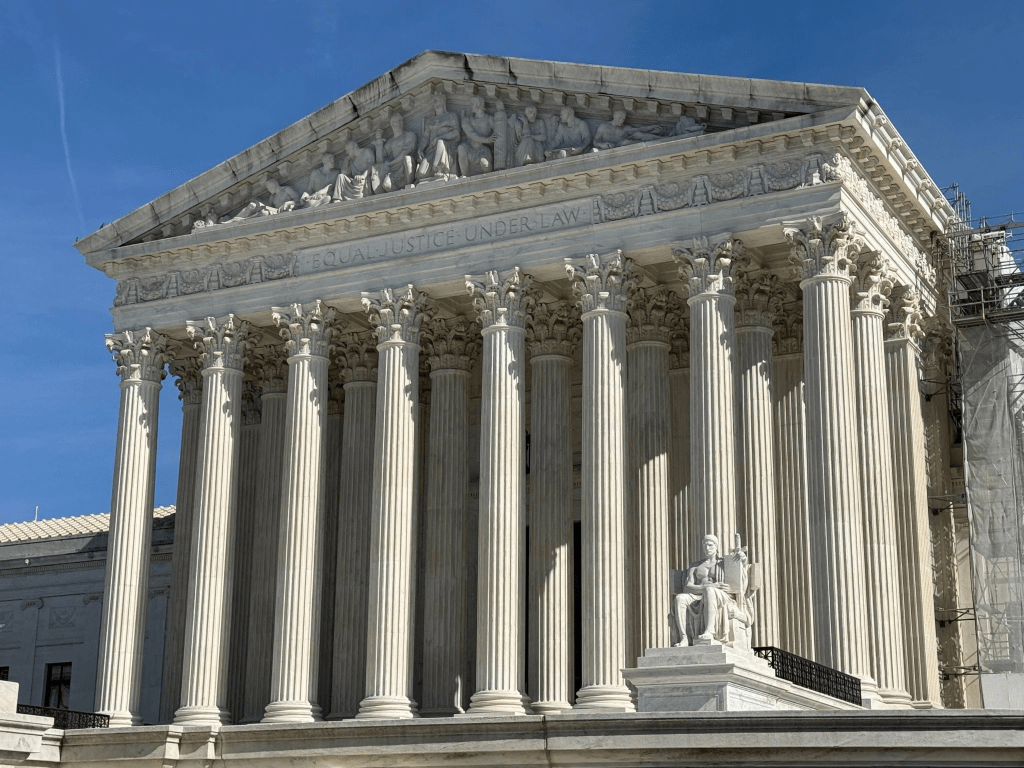
In an unprecedented and late-night decision, the U.S. Supreme Court has temporarily halted the deportation of a group of Venezuelan men detained in Texas under the Alien Enemies Act of 1798, a rarely invoked wartime statute. This emergency intervention, which emerged from a Friday night appeal, underscores complex tensions between executive authority, due process rights, and judicial oversight in immigration enforcement.
The Alien Enemies Act, enacted over two centuries ago, allows the President to detain or deport nationals of enemy countries during wartime or periods of national invasion without traditional judicial review. Historically, it was used only during the War of 1812, World War I, and World War II. But in a controversial move on March 15, former President Donald Trump invoked it via executive order, targeting members of the Venezuelan gang Tren de Aragua as perpetrators of an “invasion or predatory incursion” on U.S. territory.
Under this order, any Venezuelan male aged 14 or older could be detained and deported as an “alien enemy,” bypassing typical due process rights.
The Legal Battle Begins
Even before Trump’s executive order was signed, attorneys representing detainees filed suit in Washington, D.C., seeking to prevent their clients’ removal. Judge James Boasberg, presiding over the case, swiftly blocked the government from deporting both the named plaintiffs and other individuals under the Alien Enemies Act. In an extraordinary move, Boasberg ordered planes that had already departed the U.S. to return with the deportees.
Reports emerged that over 200 Venezuelan nationals had already been flown to El Salvador and placed in its notorious Terrorism Confinement Center, a high-security prison known for its harsh conditions. The incident sparked widespread concern among immigration advocates and legal observers.
The Supreme Court Steps In
The Trump administration appealed Boasberg’s ruling to the D.C. Circuit Court, which declined to pause the injunction. Acting Solicitor General Sarah Harris then brought the matter to the U.S. Supreme Court, arguing that the executive—not the judiciary—should control national security and immigration decisions under the Alien Enemies Act.
On April 7, the Supreme Court sided with the administration, temporarily lifting Boasberg’s ban. However, it emphasized that detainees must be notified of their pending removal and given a fair opportunity to file habeas petitions—a nod to due process principles. The Court directed that such challenges must be filed in the jurisdiction where the detainees are held, not in Washington, D.C.
Back to Texas Courts
Following the Supreme Court’s directive, detainees refiled in the Northern District of Texas. U.S. District Judge James Wesley Hendrix ruled that the men named in the lawsuit would not be removed while their individual cases were pending. However, he declined to issue a broader injunction for the entire group, asserting that the government’s assurances about procedural safeguards sufficed.
Yet, according to the detainees’ attorneys, removal notices were issued shortly thereafter, contradicting the Court’s April 7 ruling. The attorneys argued that these notices were:
- Only provided in English, despite most detainees being Spanish-speaking,
- Sent without alerting legal counsel, and
- Failed to include crucial information about detainees’ rights to challenge their status.
They warned that the government had established a “lightning-fast timeline” to remove individuals, risking irreversible harm and undermining the Court’s authority.
Emergency Appeal and Midnight Ruling
On Friday evening, lawyers filed an emergency appeal with the Supreme Court to halt these imminent deportations. The Court responded just before 1 a.m. Saturday morning, issuing an unsigned order prohibiting the removal of any putative class member until further notice. The Court emphasized that the case is currently pending before the 5th Circuit Court of Appeals, which must act before the government may respond to the detainees’ request.
Justices Clarence Thomas and Samuel Alito dissented but did not immediately explain their votes. Alito later issued a pointed five-page dissent criticizing the majority’s decision as “unprecedented and legally questionable,” arguing that the Court had acted hastily, without full briefing, and in the middle of the night—breaking from established judicial procedure.
Due Process in the Balance
This case raises profound constitutional and procedural questions about the balance of power between the executive and judicial branches, particularly under emergency national security laws like the Alien Enemies Act. It also illustrates how procedural safeguards, including timely notice and access to legal counsel, remain foundational—even when national security is cited.
While the administration maintains that it can still remove individuals under standard immigration laws, the Supreme Court’s intervention signifies that removals under the Alien Enemies Act are now on pause, pending further litigation.
The detainees’ legal team has emphasized that their challenge does not seek to protect criminal aliens or prevent lawful deportations under standard immigration statutes. Rather, it is a call for due process—to ensure that individuals are not wrongly deported under a centuries-old statute without judicial oversight.
The next steps rest with the 5th Circuit, after which the Supreme Court may weigh in more definitively.
#ImmigrationLaw #DueProcess #SupremeCourt #AlienEnemiesAct #ConstitutionalLaw #DeportationDefense #LegalRights #HabeasCorpus #SCOTUS #VenezuelanImmigrants
 lawrota.com
Leave a comment