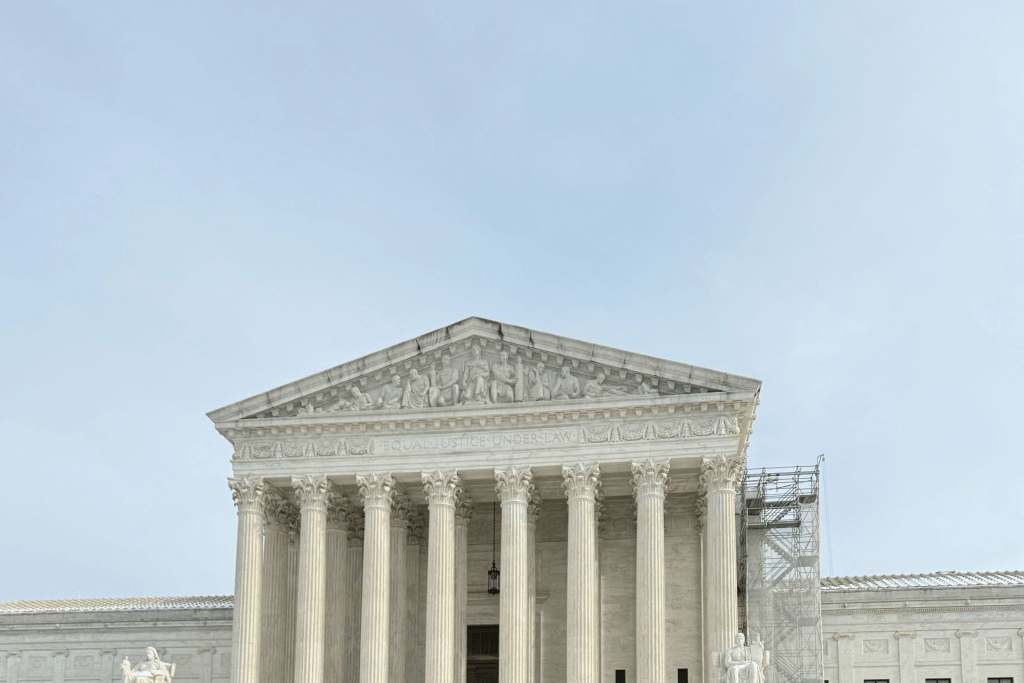
Legal Drama Unfolds: Trump Admin Asks SCOTUS to Block Judge’s Order in Wrongful Deportation Case
A Chilling Due Process Dilemma: The U.S. Government, a Foreign Mega-Prison, and a Man Caught in the Middle
In a gripping intersection of immigration law, executive authority, and human rights, the Trump administration has turned to the U.S. Supreme Court to prevent the enforcement of a federal judge’s order requiring the return of Kilmar Armando Abrego Garcia to the United States. The case, which now sits at the center of a legal and moral firestorm, tests the limits of judicial authority in foreign affairs, the scope of executive discretion, and most critically, the constitutional right to due process—even for noncitizens.
The Man at the Center: Kilmar Armando Abrego Garcia
Abrego Garcia, a Salvadoran national, had been residing in Maryland with his wife and three children. In 2019, he was granted withholding of removal by an immigration judge—a form of legal protection that bars deportation to a country where the individual is likely to face torture, persecution, or death. His record was clean: no criminal charges or convictions. Nevertheless, in March 2025, he was arrested by ICE, transferred through detention centers, and ultimately deported to El Salvador—illegally.
But this was no ordinary deportation. Abrego Garcia was delivered directly into the infamous Terrorism Confinement Center, a maximum-security mega-prison known for its brutal treatment and political symbolism under President Nayib Bukele’s hardline regime. Videos released by the Salvadoran government showed shackled, shaved prisoners arriving from the U.S.—a chilling reminder of what happens when legal safeguards fail.
The Legal Challenge Begins
Alarmed by his sudden disappearance and lack of contact, Abrego Garcia’s attorneys filed suit in federal court in Maryland, seeking an emergency order for his return. U.S. District Judge Paula Xinis issued a scathing ruling, asserting that the government had “no legal authority to arrest him, no justification to detain him, and no grounds to send him to El Salvador—let alone deliver him into one of the most dangerous prisons in the Western Hemisphere.”
She ordered the Biden administration (inheriting the case but defending the government’s position) to return Abrego Garcia by 11:59 p.m. Monday. Judge Xinis did not grant a stay for appeal.
The Fourth Circuit Court of Appeals upheld her decision, with Judge Stephanie Thacker writing that the government “has no legal authority to snatch a person who is lawfully present in the United States off the street and remove him from the country without due process.”
Enter the Supreme Court
Faced with an imminent deadline, U.S. Solicitor General John Sauer submitted an emergency request to the Supreme Court, asking for an administrative stay to block Judge Xinis’s order. Chief Justice John Roberts granted a temporary pause and asked Abrego Garcia’s lawyers to respond.
Sauer characterized the lower court’s ruling as “unprecedented,” arguing that it improperly forces the U.S. to conduct complex diplomatic negotiations under judicial deadlines. He claimed the judiciary was “treating the Executive Branch as a subordinate diplomat” and warned of separation of powers violations.
While the government admitted that the deportation was an administrative error, Sauer insisted that such mistakes do not justify what he described as judicial overreach into foreign policy—especially involving someone he alleges is connected to MS-13, the notorious gang labeled as a terrorist group.
However, Judge Xinis’s ruling directly challenged this claim. The government’s “evidence” linking Abrego Garcia to MS-13 amounted to a Chicago Bulls hat, a hoodie, and a vague tip from a confidential informant referencing a clique in New York—a place where Garcia has never lived.
The Broader Legal Implications
This case transcends a single immigration mistake. At its core, it challenges:
- Due Process Protections for immigrants, even those accused of gang affiliations.
- Judicial Oversight over executive actions that infringe on constitutional rights.
- The Separation of Powers between the judiciary and the executive in matters of foreign policy and national security.
- International Diplomacy, and whether courts can require the U.S. to “persuade” foreign nations to cooperate in righting wrongful deportations.
The case also raises a crucial question: What remedies exist when the government admits fault, but the error results in life-threatening consequences? Can the U.S. courts compel action in international affairs when human rights are on the line?
Conclusion
As the Supreme Court now weighs its role in this legal drama, the case of Kilmar Armando Abrego Garcia has become a constitutional stress test. The decisions made here could reshape how far courts can go to protect noncitizens’ rights—and hold the executive accountable for its mistakes.
For practicing lawyers and legal scholars, the case is a striking reminder that even procedural missteps in immigration enforcement can quickly snowball into complex constitutional crises. With issues of due process, habeas corpus, and foreign policy all in play, this is a case that every law student and immigration practitioner should be watching.
 lawrota.com
Leave a comment