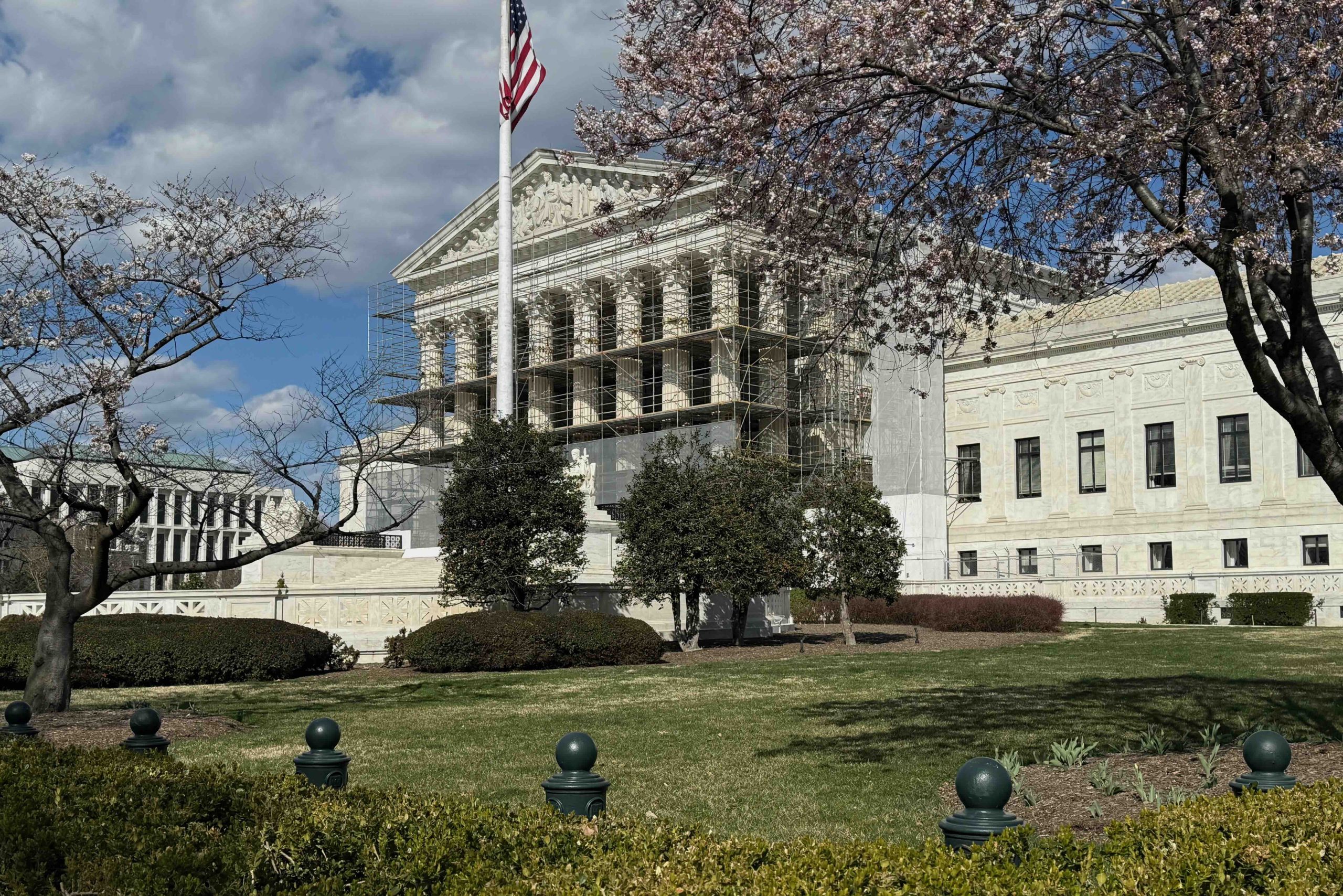
In a case that could upend access to affordable internet and telecom services for millions of Americans, the Supreme Court is poised to uphold the constitutionality of the Universal Service Fund (USF)—a program that has long helped bridge the digital divide. At the heart of the dispute is whether the Federal Communications Commission (FCC) and a private nonprofit, the Universal Service Administrative Company (USAC), overstepped constitutional boundaries by setting mandatory telecom fees without explicit legislative control.
The USF was established by Congress under the Telecommunications Act of 1996 to ensure universal access to telecommunications—especially for schools, libraries, rural health centers, and low-income areas. Telecommunications providers contribute to the fund each quarter, passing the cost along to customers. USAC, under FCC supervision, calculates and administers these contributions.
A conservative group, Consumers’ Research, known for pushing back against what it deems “woke capitalism,” challenged the USF in four federal circuits, arguing that it violates the nondelegation doctrine—the idea that Congress cannot hand off its legislative powers to executive agencies or private entities. In one such case, the Fifth Circuit agreed, stating that both the delegation from Congress to the FCC and from the FCC to USAC likely crossed constitutional lines.
But when the case landed in front of the U.S. Supreme Court, justices from across the ideological spectrum appeared skeptical of Consumers’ Research’s arguments. During an intense three-hour oral argument, multiple justices questioned the group’s assertion that the FCC was effectively operating without guardrails.
Acting Solicitor General Sarah Harris defended the program, stating that Congress had clearly laid out the policy goal (universal service), the mechanisms (carrier fees and reimbursements), the limits (only what’s sufficient), and the target beneficiaries (underserved groups). She asserted that the FCC’s implementation falls well within constitutional bounds and doesn’t resemble the kind of “delegation running riot” that courts should strike down.
Justice Neil Gorsuch, however, appeared sympathetic to Consumers’ Research, likening the situation to 1935-era nondelegation cases where regulated industries had undue influence over federal law. He emphasized the uniqueness of what he called a “tax” that wasn’t clearly approved by Congress.
But the rest of the bench—especially Justices Kavanaugh, Barrett, Kagan, Sotomayor, and Jackson—pushed back. Justice Kavanaugh questioned what a financial cap would even achieve, arguing that inserting arbitrary limits like “$1 trillion” would be performative rather than practical. Barrett echoed that a numerical cap might just be “throwing a number out there.”
Justice Elena Kagan stressed that real limitations already exist within the USF program—the FCC is tasked with achieving very specific objectives, such as ensuring telecom access for those in rural or low-income areas. In her view, those constraints suffice to meet constitutional muster.
Meanwhile, Justice Clarence Thomas—a known nondelegation skeptic—was concerned about the scope of the FCC’s authority to raise revenue. But Harris, who once clerked for Thomas, argued that the FCC is strictly limited to collecting only what’s “sufficient” to meet its defined obligations under the law.
Another area of concern came from Justice Samuel Alito, who suggested that the FCC may be “rubber-stamping” USAC’s proposals. But Harris countered that the FCC has overridden USAC four times and fully controls the contribution formula, minimizing the risk of unchecked discretion.
Paul Clement, representing telecom industry interests, warned that striking down the USF could cause severe disruption. Programs that benefit Native American reservations, remote rural communities, health care facilities, and public education systems could collapse. He highlighted that the cost of connectivity, if socialized across the nation, benefits everyone.
Justice Jackson took this concern further, asking whether a decision against the USF could create a legal domino effect impacting other agencies with fee-based funding models. Harris confirmed that many federal programs could be in legal jeopardy if the Court invalidated the USF structure.
Despite Gorsuch’s strong dissent, it appears that a majority of the Court is leaning toward upholding the FCC’s authority and the USF program. The practical consequences of invalidating such a massive connectivity program, coupled with the structured statutory guidance Congress provided, seem to weigh heavily on the justices.
While the nondelegation doctrine remains a powerful constitutional argument, this case may reaffirm the modern Court’s tendency to allow some level of discretion for regulatory agencies—especially when Congress has set specific parameters and the public interest is at stake.
#FCC #SupremeCourt #BroadbandAccess #TelecomLaw #UniversalServiceFund #SCOTUSWatch #LegalNews #ConLaw #InternetForAll #LawBlog
Source: https://www.scotusblog.com/2025/03/justices-appear-likely-to-uphold-fcc-telecom-access-subsidy/
 lawrota.com
Leave a comment