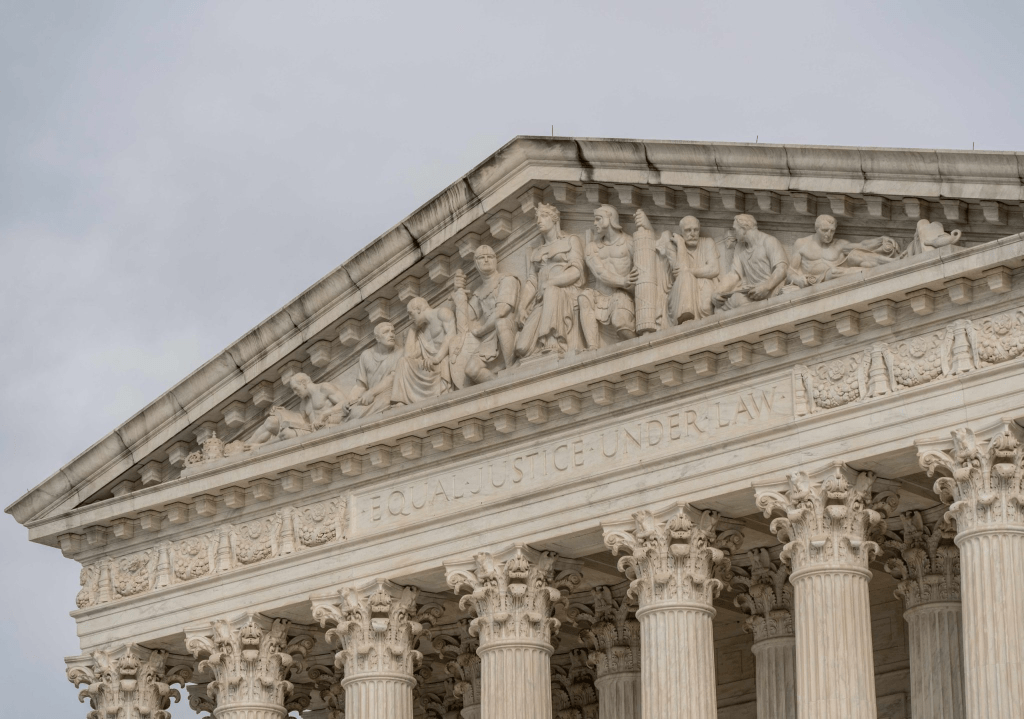
In a dramatic twist that has reignited debates over the very foundation of American citizenship, recent developments have once again brought birthright citizenship into the national spotlight. Shortly after his second inauguration on January 20, President Donald Trump issued an executive order aimed at ending birthright citizenship—the principle that grants automatic U.S. citizenship to anyone born on American soil. Under the new order, children born in the United States would no longer automatically receive citizenship if their parents are in the country illegally or are only temporarily present.
However, this radical reinterpretation of the Citizenship Clause was met with immediate judicial resistance. Just three days later, a federal judge in Seattle issued a temporary injunction blocking the order, calling it “blatantly unconstitutional.” Similarly, a separate federal judge in Maryland halted enforcement of the executive order while a lawsuit, spearheaded by immigrants’ rights groups and several pregnant women, is pending. These judicial responses underscore a prevailing consensus in the judiciary: no court in the country has ever endorsed the president’s narrow interpretation of the 14th Amendment’s Citizenship Clause.
The Historical Foundation of Birthright Citizenship
To understand the gravity of Trump’s executive order, one must consider the long and storied history of birthright citizenship in the United States. The principle was explicitly enshrined in the Constitution with the adoption of the 14th Amendment in 1868, following the Civil War. At its core, the 14th Amendment was intended to overturn the infamous Dred Scott decision of 1857—a ruling that held that Black individuals, particularly those whose ancestors had been enslaved, were not citizens and thus had no standing in federal court. This constitutional safeguard was designed to ensure that all persons born on U.S. soil, regardless of race or the legal status of their parents, would be recognized as citizens.
Wong Kim Ark: A Cornerstone Case
The landmark case of Wong Kim Ark further cemented the principle of birthright citizenship. Born in San Francisco to Chinese parents who were lawful permanent residents, Wong Kim Ark was denied reentry to the United States after traveling to China. In an historic decision in 1898, the Supreme Court ruled by a 6-2 majority that Wong Kim Ark was indeed a U.S. citizen by virtue of his birth on American soil. Justice Horace Gray, writing for the majority, emphasized that the 14th Amendment applies broadly—extending citizenship not just to Black Americans, for whom it was initially intended, but to all persons born in the United States. This decision affirmed the “ancient and fundamental rule of citizenship by birth,” making the U.S. one of roughly 30 nations worldwide that offer automatic citizenship to everyone born within its borders.
Notably, dissenting opinions, such as that of Chief Justice Melville Fuller, argued that Wong Kim Ark was not fully subject to U.S. jurisdiction because of his Chinese ancestry, pointing to a perceived dual allegiance. However, these dissenting views failed to garner support, and the Wong Kim Ark ruling has since served as a bedrock of American citizenship law.
Subsequent Interpretations and Plyler v. Doe
The expansive interpretation of the 14th Amendment continued to evolve with cases like Plyler v. Doe (1982), where the Supreme Court held that undocumented immigrants were also entitled to equal protection under the law. Justice William Brennan, in his opinion, underscored that the phrase “within its jurisdiction” confirms that every individual—citizen or non-citizen—subject to U.S. laws is entitled to constitutional protections. This broad understanding reinforces that the rights conferred by the 14th Amendment are not contingent on the legal status of one’s parents but on the simple fact of being born in the country.
The Contemporary Debate: Trump’s Executive Order and Its Challenges
Trump’s executive order represents a stark departure from these longstanding principles. By arguing that birthright citizenship should not apply to children of undocumented immigrants or temporary visitors, the order challenges the judicially upheld interpretation of the 14th Amendment. Federal judges in Seattle and Maryland, along with other challenges filed in Massachusetts, New Hampshire, and the District of Columbia, have signaled a unified judicial stance against this reinterpretation.
The legal crux of the matter revolves around what it means to be “subject to the jurisdiction” of the United States—a phrase that has been pivotal in past Supreme Court rulings. The government’s argument under Trump’s order suggests that children whose parents are not permanently residing in the U.S. owe a “measure of allegiance” to their parents’ home country, thereby excluding them from automatic citizenship. Opponents counter that this narrow interpretation undermines the original intent of the 14th Amendment, which was designed to ensure that all persons born in the U.S. are citizens, thereby protecting them under the law regardless of their parents’ immigration status.
Federal judges have expressed strong reservations about the order. For instance, Senior U.S. District Judge John Coughenour described the order as “blatantly unconstitutional,” while Judge Deborah Boardman in Maryland noted that no other court has endorsed such an interpretation. These judicial interventions not only block the immediate enforcement of Trump’s order but also set the stage for a broader legal battle over the fundamental nature of citizenship in America.
Implications for the Future
The outcome of these legal challenges could have profound implications for the future of U.S. immigration and citizenship policies. A ruling upholding birthright citizenship would reaffirm the status quo, ensuring that the principle remains intact despite political shifts. Conversely, a decision that supports Trump’s interpretation could fundamentally alter the American citizenship landscape, potentially disenfranchising millions of children born in the U.S. to undocumented or non-permanent residents.
Moreover, this legal battle is not merely a dispute over administrative policy; it is a confrontation over the very essence of what it means to be an American. The debate touches on core constitutional principles and historical precedents that have defined American identity for over 150 years.
The legal community is watching closely as these cases continue to unfold, with significant implications for how future generations will be defined as citizens and how the rights conferred by the 14th Amendment will be protected. For lawyers and law students, this case serves as a crucial reminder of the dynamic interplay between constitutional law, judicial interpretation, and public policy. The Supreme Court’s eventual ruling will likely become a landmark decision in the ongoing debate over immigration, citizenship, and national identity.
#BirthrightCitizenship #SupremeCourt #14thAmendment #WongKimArk #USCitizenship #ConstitutionalLaw #ImmigrationLaw #LegalHistory #DredScott
Source: https://www.scotusblog.com/2025/02/a-history-of-birthright-citizenship-at-the-supreme-court/
 lawrota.com
Leave a comment