
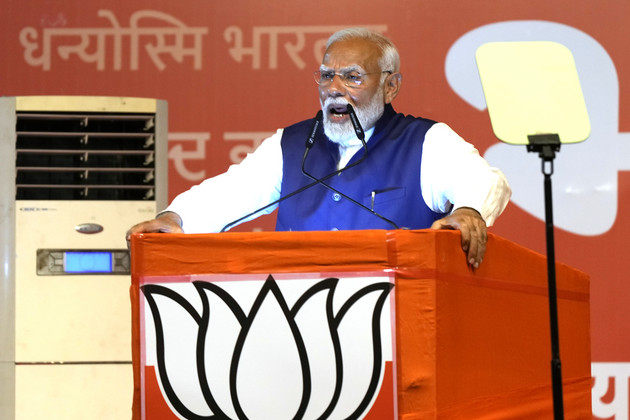
India’s Prime Minister Narendra Modi has declared victory in the 2024 general elections, but not without facing significant setbacks. Despite winning a third term, Modi’s Bharatiya Janata Party (BJP) saw a considerable reduction in seats, indicating a shifting political climate. This article delves into the election results, the implications for Modi’s administration, and the broader socio-political landscape of India.
A Mixed Victory: Modi’s Third Term
Prime Minister Narendra Modi celebrated his coalition’s victory in the general elections, securing enough seats to form a government but falling short of a sweeping majority. The National Democratic Alliance (NDA), led by Modi’s BJP, won 286 seats—above the 272 needed for a majority but significantly fewer than anticipated. The BJP itself garnered 240 seats, a substantial drop from the 303 seats won in the 2019 elections.
Despite these losses, Modi’s win marks the second time an Indian leader has retained power for a third term since Jawaharlal Nehru. However, the diminished majority signifies that Modi will now be more reliant on his coalition partners, which could complicate policymaking and governance.
Challenges Ahead: Coalition Dependency
The reduced majority means that the BJP will depend heavily on its allies within the NDA. According to Milan Vaishnav, director of the South Asia Program at the Carnegie Endowment for International Peace, this dependency grants coalition partners significant leverage, potentially influencing key policies and government formation. This dynamic represents a marked shift from Modi’s previous terms, where the BJP held a clear majority.
Opposition Gains and Setbacks
The main opposition, the Congress party, along with its allies in the INDIA coalition, won 225 seats and were leading in five more at the time of reporting. Congress President Mallikarjun Kharge framed the election results as a moral and political loss for Modi, despite their own inability to unseat the BJP.
Rahul Gandhi, a prominent leader within the Congress party, interpreted the results as a message from the electorate, emphasizing the role of the poor in defending India’s constitution. This sentiment resonates with the socio-economic challenges many Indians face, such as unemployment and poverty, which were central themes in the opposition’s campaign.
Economic Promises and Nationalism
Modi has pledged to advance India’s economic status, aiming to make it the world’s third-largest economy. His promises include boosting defense production, creating jobs for the youth, raising exports, and supporting farmers. Despite economic achievements, critics argue that Modi’s tenure has seen growing inequality and unemployment, particularly among the youth.
Modi’s governance has also been marked by Hindu nationalist policies, which have deeply polarized Indian society. His rhetoric and policies have often targeted Muslims, who comprise 14% of the population, in a bid to galvanize his Hindu voter base. This strategy, while effective in securing votes, has exacerbated social divisions.
A Divisive Leader
Modi’s popularity often eclipses that of his party. His campaign strategy resembled a presidential campaign more than a parliamentary one, with the BJP heavily relying on Modi’s personal brand. Yamini Aiyar, a public policy scholar, noted that Modi was not just the prime campaigner but the sole face of the BJP’s election drive.
Under Modi’s leadership, critics assert that India’s democracy has been strained by tactics aimed at suppressing political opposition, controlling the media, and stifling dissent. The government refutes these claims, maintaining that Indian democracy is robust and thriving.
Voter Sentiments and Campaign Dynamics
The BJP’s initial campaign focused on “Modi’s guarantees,” emphasizing economic and welfare initiatives aimed at reducing poverty. Modi frequently reiterated his vision of transforming India into a developed nation by 2047. However, as the campaign progressed, the BJP intensified its polarizing rhetoric, targeting the Muslim community to consolidate its Hindu vote bank.
The opposition capitalized on issues of joblessness, inflation, and inequality, which resonated with many voters. These issues, coupled with Modi’s polarizing tactics, contributed to the BJP’s reduced seat count, suggesting a shift in voter priorities and sentiments.
Conclusion
Narendra Modi’s third-term victory, while significant, comes with notable challenges. The BJP’s reduced majority necessitates greater reliance on coalition partners, potentially complicating governance. The election results also reflect growing discontent with economic inequality and polarizing politics. As Modi moves forward, balancing his nationalist agenda with the coalition’s demands and addressing socio-economic issues will be crucial for his administration’s success. The enduring impact of these elections on India’s political landscape underscores the complexities of governing the world’s largest democracy.
#IndiaElections2024#ModiVictory#IndianPolitics#BJPElection#CoalitionGovernment#EconomicPromises#HinduNationalism#DemocracyInIndia
Source: https://www.politico.com/news/2024/06/04/modi-wins-india-election-00161596
 lawrota.com
Leave a comment