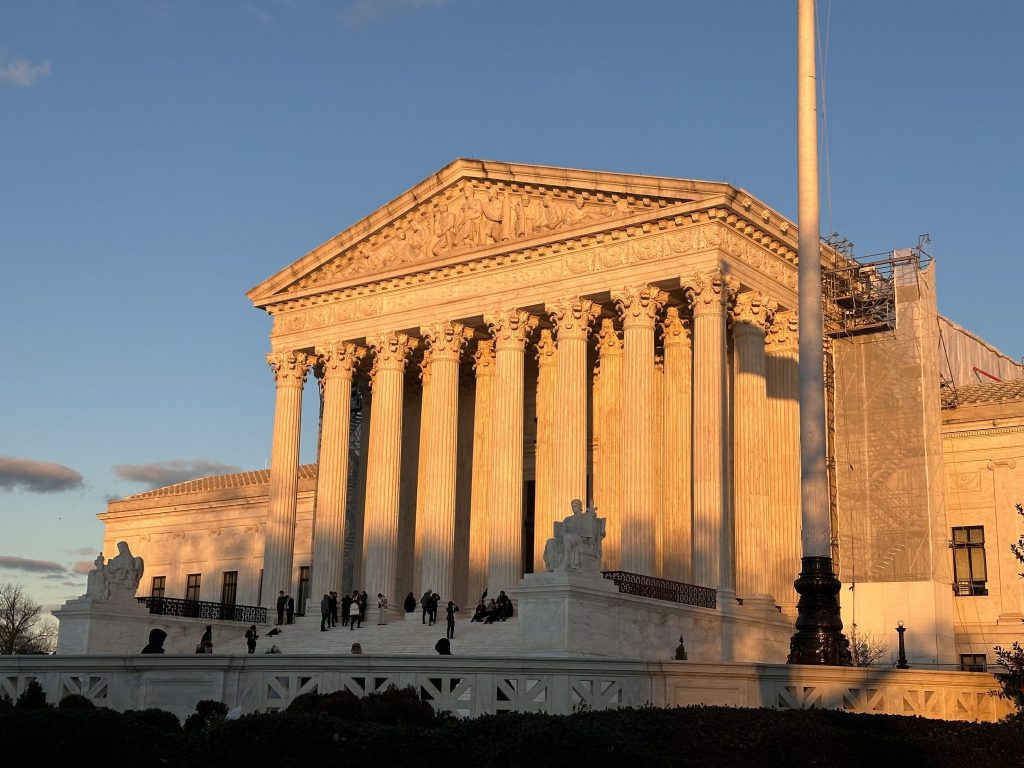
The Supreme Court recently delved into a pivotal case surrounding the Environmental Protection Agency’s (EPA) attempt to regulate air pollution from power plants and industrial facilities across 23 states. At the heart of the matter lies the “good neighbor” provision of the Clean Air Act, mandating upwind states to curtail emissions affecting downwind states’ air quality.
In 2015, the EPA set forth new air-quality standards for ozone pollution, prompting states to submit compliance plans. Disputes arose when the EPA rejected plans from 21 states and formulated its own strategy for these states. This move triggered legal challenges, with Ohio, Indiana, and Virginia leading the charge in appealing to the Supreme Court.
During oral arguments, conservative justices questioned the EPA’s implementation process, highlighting concerns about the plan’s efficacy and legality. On the contrary, liberal justices emphasized procedural irregularities in bringing the case to the Supreme Court, arguing against granting emergency relief without exhausting lower court proceedings.
Debates centered on whether the EPA adequately considered potential variations in state participation and the economic impact of the regulation. Despite differing viewpoints, the court’s inclination suggests a critical examination of EPA regulations and their implications for state autonomy and environmental protection.
#SupremeCourt #EPAregulation #CleanAirAct #EnvironmentalProtection #OzoneRegulation #LegalChallenges #AirQuality #StateAutonomy #EnvironmentalPolicy #JudicialReview
Source: https://www.scotusblog.com/2024/02/supreme-court-likely-to-block-epa-ozone-regulation/
 lawrota.com
Leave a comment