
In a pivotal legal showdown, the Supreme Court leaned toward supporting an Arizona man, Jason Smith, who claims a violation of his constitutional rights under the Sixth Amendment’s confrontation clause. The clause, ensuring defendants confront witnesses against them, came into question when an expert witness testified about drug analysis conducted by another forensic scientist, Elizabeth Rast, who did not testify in court.
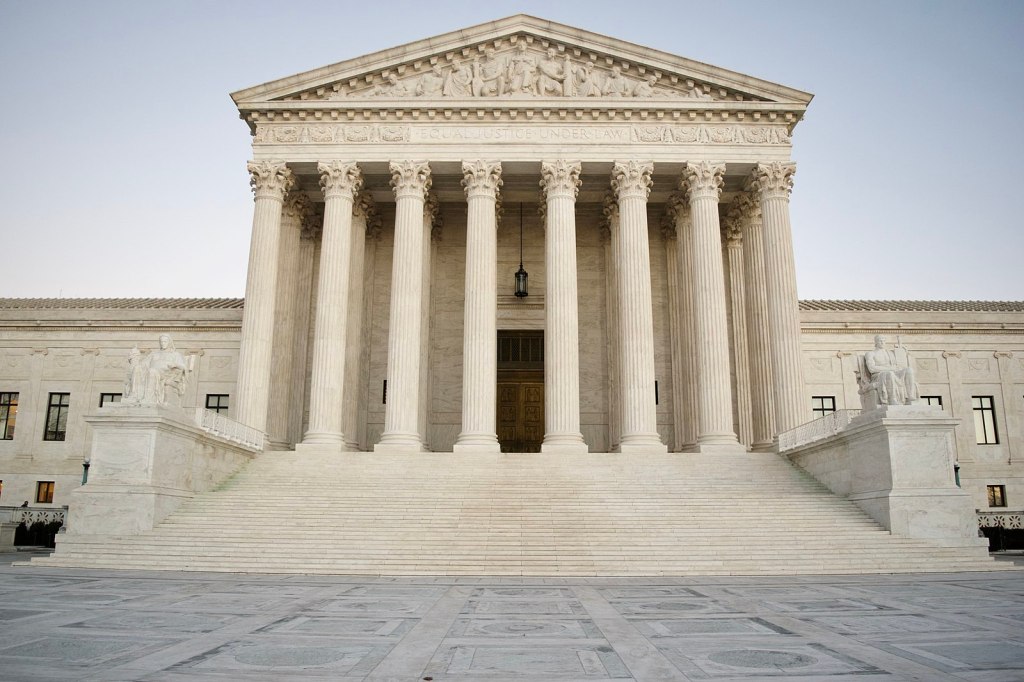
The Supreme Court’s recent session featured a compelling case involving Jason Smith, an Arizona man who argued a violation of his constitutional rights during his trial. Smith, convicted and sentenced to four years in prison, raised concerns about the testimony of forensic scientist Greggory Longoni. Longoni’s statements, based on drug analysis conducted by Elizabeth Rast, who did not testify, ignited a debate over the Sixth Amendment’s confrontation clause.
Smith’s lawyer, Hari Santhanam, argued that Longoni lacked personal knowledge of Rast’s testing and essentially acted as a messenger, conveying Rast’s statements without offering independent opinions. The central issue revolved around whether this breached the confrontation clause, as the state courts applied a “legal fiction” that allowed experts to state conclusions without providing the basis for their truth.
Deputy U.S. Solicitor General Eric Feigin proposed a middle ground, acknowledging potential overreach in Longoni’s testimony but suggesting no confrontation clause violation if an expert testifies solely to the bottom-line conclusion. The state of Arizona, represented by Alexander Samuels, vehemently asserted that Longoni formed independent conclusions based on Rast’s work, arguing that evidence not offered to prove the expert’s testimony true does not violate the confrontation clause.
During oral arguments, justices focused on two main points. Firstly, they questioned the purpose of Rast’s documents at trial and whether they were used to establish the truth of Longoni’s testimony. Justice Clarence Thomas expressed skepticism, emphasizing the potential friction with the confrontation clause if the truth was necessary for the opinion to be useful.
Secondly, the justices explored whether Rast’s documents were testimonial, subject to the confrontation clause. Santhanam argued for their testimonial nature, highlighting their creation after the trial date had been set. Samuels, on the other hand, contended that the documents were non-testimonial, lacking the formality and solemnity associated with testimony.
The court’s decision will likely hinge on these key questions, with Justice Sonia Sotomayor and Justice Elena Kagan questioning whether the state’s argument on the non-testimonial nature of the documents was properly presented in the lower courts. The outcome of this case is eagerly anticipated, as it could shape the interpretation of the confrontation clause in criminal trials. A decision is expected by the summer, promising potential implications for defendants’ rights and the use of expert testimony in courtrooms nationwide.
#ConstitutionalRights #LegalBattle #SixthAmendment #ForensicScience #SupremeCourt #ConfrontationClause #CriminalDefense #LegalAnalysis #ExpertWitness #DrugCase
Source: https://www.scotusblog.com/2024/01/court-appears-to-favor-arizona-mans-confrontation-clause-claim/
 lawrota.com
Leave a comment