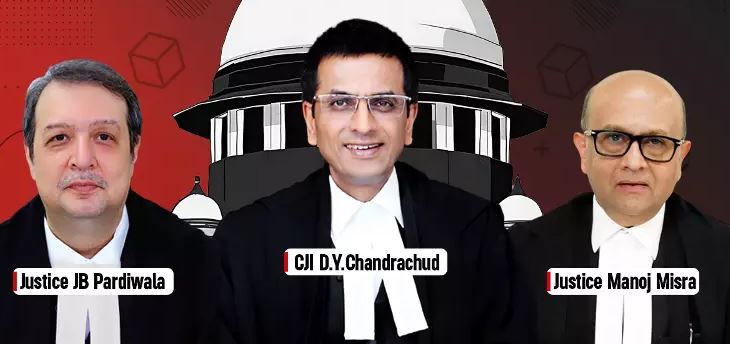
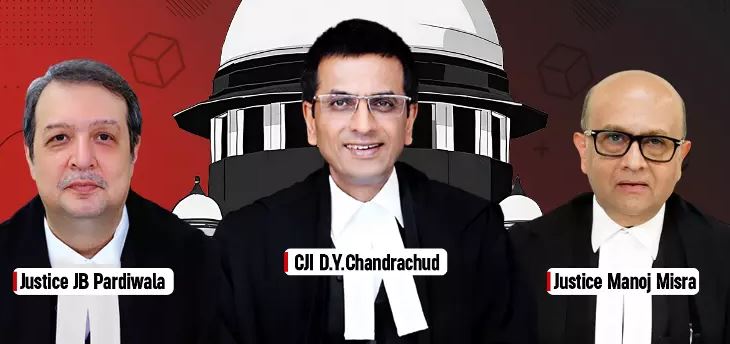
In a significant development, the Supreme Court has taken an unprecedented step to ensure the swift resolution of pending criminal cases against Members of Parliament and Members of Legislative Assemblies. This move, orchestrated by a bench comprising Chief Justice of India DY Chandrachud, Justice JB Pardiwala, and Justice Manoj Misra, seeks to address the challenges of expediting justice in a diverse legal landscape where uniform guidelines are not feasible. The Supreme Court has now entrusted High Courts with the responsibility of evolving measures to effectively monitor and expedite these cases.
Key Directions for Early Disposal of Pending Cases:
- Suo Motu Case for MPs/MLAs: High Court Chief Justices are required to register a suo motu case titled “In Re Designated Courts for MPs/MLAs” to oversee the prompt resolution of pending criminal cases against elected representatives. A special bench led by the Chief Justice or an assigned bench will handle this case.
- Regular Monitoring: The special bench can schedule hearings at intervals as deemed necessary and issue orders to ensure the expeditious and effective disposal of these cases. It may even call upon the Advocate General or Prosecutor for assistance.
- Allocation of Cases: High Courts may assign a Principal District & Sessions Judge to oversee the allocation of cases to designated courts. The Principal District & Sessions Judge will also provide periodic reports on the progress of these cases.
- Priority Cases: Designated courts must prioritize cases involving MPs/MLAs that carry severe penalties, such as death or life imprisonment, as well as those with sentences of five years or more. Trial courts are discouraged from unnecessary adjournments.
- Stay Orders: The Chief Justice is tasked with reviewing cases with stay orders to ensure the commencement of trials.
- Infrastructure and Technology: The Principal District & Sessions Judge is responsible for ensuring adequate infrastructure and technology for designated courts to function efficiently.
- Transparency: High Courts are required to create a dedicated section on their websites, offering district-wise information on the year of filing, the number of pending cases, and the current stage of proceedings.
These groundbreaking directions aim to streamline the legal process, allowing for the swift and efficient resolution of pending cases involving elected officials. The Supreme Court’s decision to dispose of the first prayer in the PIL filed by Ashwini Upadhyay underlines its commitment to addressing this issue.
#SupremeCourt #MPs #MLAs #CriminalCases #LegalReforms #IndianLaw #HighCourt #JusticeSystem
 lawrota.com
Leave a comment